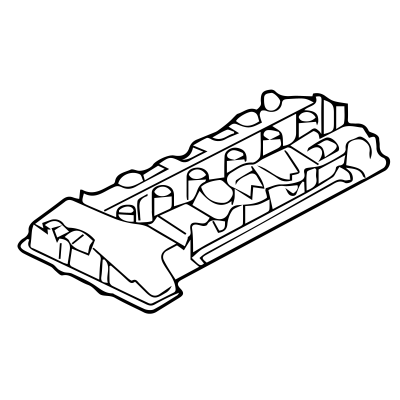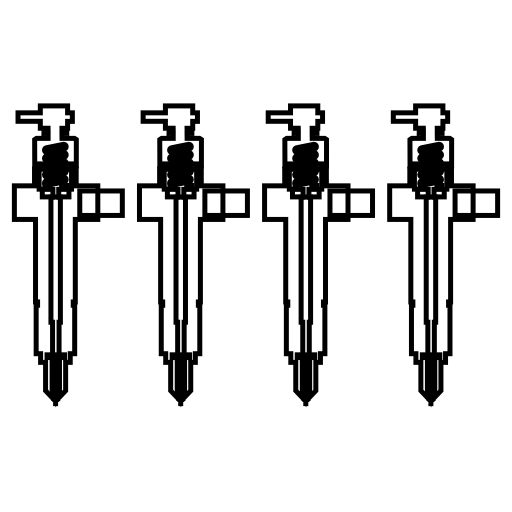


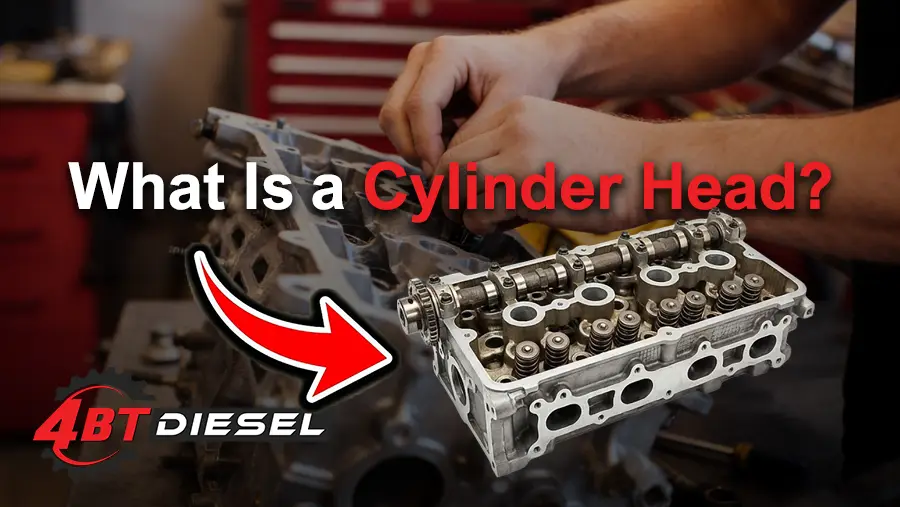
The cylinder head is one of the most important parts of any internal combustion engine. It sits on top of the engine block, seals the top of the cylinders, controls airflow in and out, helps cool the engine, and holds the valves and other key pieces. A strong, well-maintained cylinder head directly affects power, fuel economy, emissions, and how long your engine lasts.
In heavy-duty diesel engines—like those in trucks, excavators, loaders, bulldozers, and industrial machines—the cylinder head faces extreme heat, pressure, and vibration every day. That’s why it’s built tough and why proper care matters so much.
This guide explains in simple terms what a cylinder head does, its main parts, common problems, easy maintenance tips (with real-world examples including specific machine models and matching cylinder heads), when to repair or replace it, and how to choose a good one for cars or heavy equipment.
What Is a Cylinder Head?
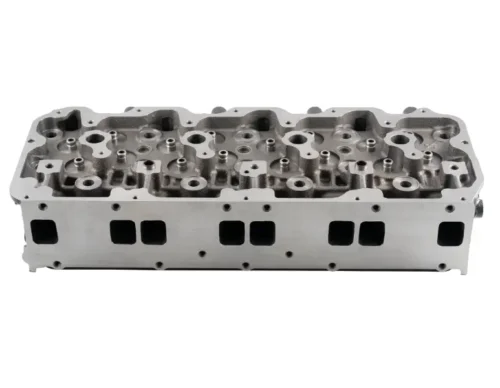
The cylinder head is a large metal piece bolted on top of the engine block. Together with the pistons and cylinder walls, it creates the sealed space (combustion chamber) where fuel burns to make power.
It’s held in place by very strong head bolts or studs, tightened in a special order and to exact torque values to keep everything perfectly sealed.
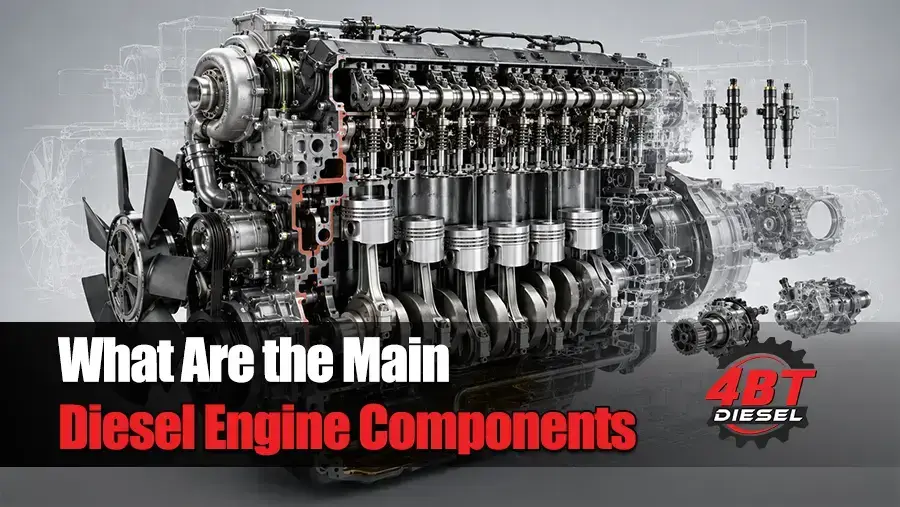
Modern diesel cylinder heads (especially in trucks and construction machines) are very complex because they contain:
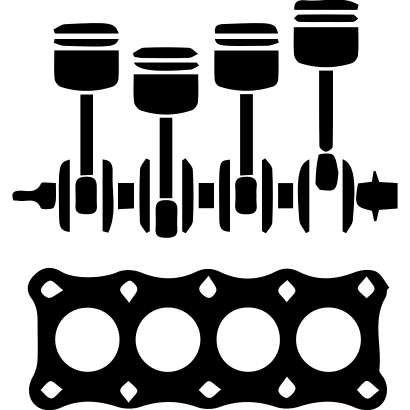
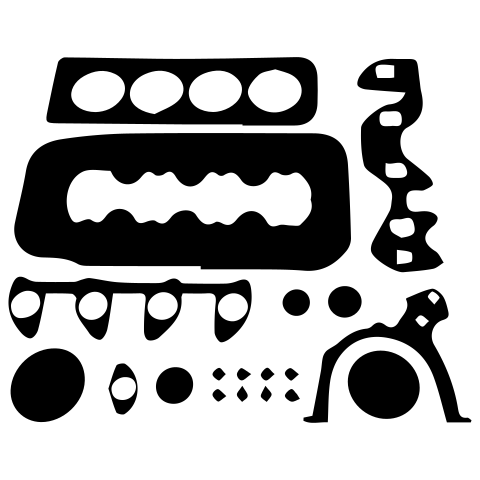
- Head gasket
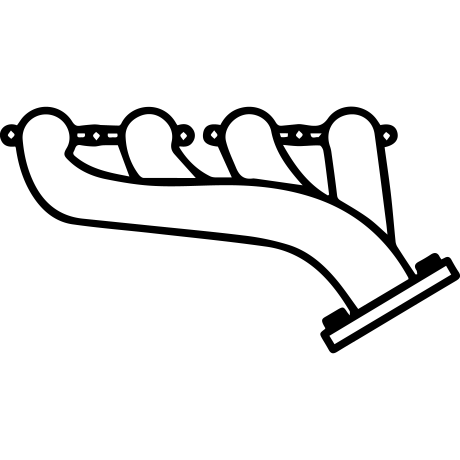
- Intake and exhaust ports
- Head valves
- Head combustion chamber
- Spark plugs
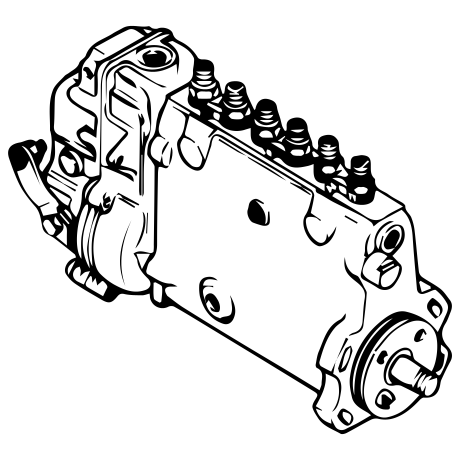
- Fuel injectors
- Head camshaft
- Additional cylinder head parts
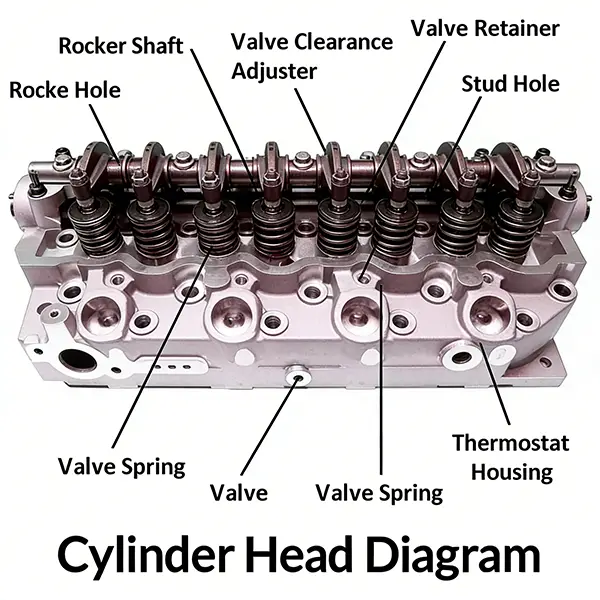
Because it’s so complicated, the cylinder head is one of the most expensive and precise castings in the entire engine.
For a good visual overview of cylinder head design, see How a Car Works – Cylinder Head Explained.
What Does a Cylinder Head Actually Do?
Here are the main jobs of the cylinder head:
- Seals the Combustion Chamber It closes the top of the cylinders so combustion pressure (up to 2,000–3,000 psi in diesels) stays inside. The head gasket helps make a perfect seal—no combustion gases, coolant, or oil should leak between the head and block.
- Holds the Valves and Valve Train It contains intake valves (let air/fuel in), exhaust valves (let burned gases out), valve springs, guides, seats, and sometimes the camshaft. These parts control exactly when and how much air enters and leaves.
- Cools Hot Spots Coolant flows through passages in the head to carry away heat from valves, injector tips, and combustion areas. Good cooling prevents warping, cracking, or overheating damage.
- Guides Air and Exhaust Flow The intake and exhaust ports are shaped to move air smoothly into the cylinders and exhaust out efficiently. Port design greatly affects power, fuel economy, and emissions.
Main Types of Cylinder Heads
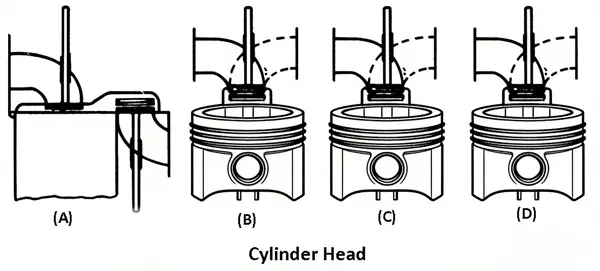
Different engines use different head designs:
- Flathead — Valves are in the block (old style, rare today).
- Overhead Valve (OHV / Pushrod) — Valves in head, camshaft in block (common in older heavy-duty diesels).
- Overhead Cam (OHC / SOHC) — Camshaft in head, fewer moving parts.
- Dual Overhead Cam (DOHC) — Two camshafts in head for better valve control (used in many modern diesels and high-performance engines).
Most heavy-duty Cummins, Caterpillar, and Volvo engines use OHV or OHC designs for strength and simplicity.
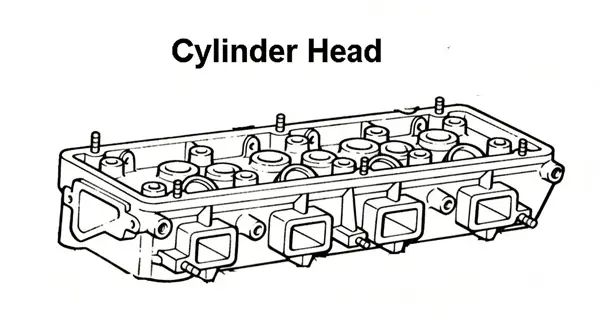
How Cylinder Heads Are Made
Making a cylinder head is a precise, multi-step process:
- Material & Casting — Usually cast iron (strong, cheap) or aluminum alloy (light, better cooling). Sand casting creates the basic shape with internal coolant/oil passages.
- Rough Machining — Removes extra material to get the basic shape.
- Precision Machining — Valve seats, guides, injector holes, cam journals, and bolt holes are machined to very tight tolerances.
- Heat Treatment — Quenching and tempering make the head stronger and more fatigue-resistant.
- Surface Finishing — Sandblasting, coating, or polishing for corrosion resistance.
- Quality Checks — Pressure testing, crack detection, flatness measurement, and leak testing ensure no defects.
Common Cylinder Head Problems and Causes
Even strong heads can fail. Here are the most frequent issues:
- Overheating & Warping — High temps cause the head to twist or bow.
- Cracking — Thermal stress, casting flaws, or sudden cold/hot cycles create cracks (often near valve seats or injector holes).
- Valve Seat Wear — Heat and poor lubrication wear seats, causing leaks.
- Head Gasket Failure — Leads to coolant in oil, oil in coolant, or combustion gas leaks.
- Coolant Erosion — Poor coolant quality eats away at passages.
In construction and mining machines, dust, vibration, and constant heavy loads make these problems happen faster.
Easy Cylinder Head Maintenance Tips (With Real Machine Examples)
Good habits can double or triple cylinder head life. Here are practical tips with actual cases, including specific equipment models and the matching cylinder head part numbers:
- Check for Leaks Regularly Look for coolant/oil drips around the head/block joint or valve cover. White exhaust smoke or milky oil means trouble. Real case: A Komatsu PC200-8 excavator (Cummins 6BTAA5.9 engine) lost power after 4,200 hours. Visual check found a small coolant leak at the head. Early repair using Cummins cylinder head 3966448 (complete assembly) saved a full rebuild, avoiding 2 weeks of downtime.
- Torque Head Bolts Correctly Always use a torque wrench and follow the exact sequence and values from the manual. Real case: A Volvo EC210B excavator (Cummins 6BT5.9) had repeated gasket failures. Re-torquing bolts to spec (using Volvo/Cummins head bolt kit 3804896) fixed it—no head damage. The machine returned to full production in one day.
- Keep Cooling System Clean Change coolant on schedule, use the right type, and flush the system yearly. Real case: A Caterpillar 320D excavator (Cummins QSB6.7 engine) boiled in summer. Scale in head passages reduced cooling. Flush + new coolant + replacement of Caterpillar/Cummins cylinder head 3966449 fixed it permanently.
- Change Oil on Time Use API CK-4 or CJ-4 diesel oil; change more often under heavy load. Real case: A Hitachi ZX210LC-5 excavator (Cummins 6BTAA5.9) had valve noise from dirty oil. Fresh oil + valve adjustment + preventive head inspection (using Cummins head 4942359) solved it before major damage.
- Adjust Valve Clearance Check every 2,000 hours or when noisy. Real case: A John Deere 210G backhoe loader (Cummins QSB4.5) lost power from loose valves. Adjustment restored performance and saved the Cummins head assembly 5263316 from excessive wear.
- Professional Inspection Every 2 years or 200,000 miles: ultrasonic crack test, flatness check, valve seat inspection. Real case: A Komatsu WA380-8 wheel loader (Cummins QSB6.7) at 6,800 hours showed early symptoms. Ultrasonic testing found micro-cracks. Replacement with Cummins cylinder head 5263317 prevented sudden failure during a big project.
When Should You Repair or Replace the Cylinder Head?
Repair is usually possible if:
- Minor warping (can be machined flat)
- Worn valve seats/guides (replaceable)
- Small surface cracks (weldable in some cases)
Replace the head if:
- Cracks reach critical areas (valve seats, injector holes)
- Warping exceeds factory limit (usually >0.05 mm)
- Repeated gasket failures (head/block damage)
- Severe structural damage
Complete Cylinder Head vs. Bare Cylinder Head (Quick Comparison)
| Feature | Complete Cylinder Head | Bare Cylinder Head |
| Definition | Fully assembled with valves, springs, guides, seals | Just the machined casting—no internal parts |
| Included Parts | Valves, guides, springs, seals, cam bearings | None |
| Installation Time | Fast (2–4 hours) | Long (8–12+ hours) |
| Labor Cost | Lower | Higher (needs assembly) |
| Risk of Assembly Error | Very low (factory-assembled) | Higher (depends on mechanic) |
| Initial Cost | Higher | Lower |
| Total Ownership Cost | Usually lower (less labor, less risk) | Higher (labor + potential rework) |
| Best For | Fleet repairs, quick fixes | Engine builders, custom projects |
FAQs About Cylinder Heads
Q: What causes cylinder head failure most often?
A: Overheating, thermal stress, poor coolant, or gasket failure.
Q: Can a cracked cylinder head be repaired?
A: Small cracks sometimes can (welding/machining), but major cracks usually require replacement.
Q: How do I know if my cylinder head is bad?
A: White smoke, coolant loss, milky oil, overheating, power loss, or bubbles in radiator.
Q: How often should I inspect the cylinder head?
A: Every 2 years or 200,000 miles, or immediately if symptoms appear.
Q: How much does cylinder head repair cost?
A: Minor repairs $500–$2,000; full replacement $2,000–$6,000+ (parts + labor).
Professional Cylinder Head Supply for Heavy-Duty Trucks & Equipment
For trucks, excavators, loaders, or industrial machines, you need cylinder heads that meet OEM standards and handle tough conditions. 4BTdiesel supplies high-quality cylinder heads and complete assemblies for Cummins, Volvo, Scania, MAN, Caterpillar, Komatsu, Hitachi, John Deere, and more. Each head is pressure-tested, crack-checked, and built for long life in commercial and construction use.
For reliable supply and support, visit 4BTdiesel cylinder head.
Need a cylinder head for your Cummins or heavy equipment? Contact us or explore our Cummins engine parts collection for fast delivery.Got questions about cylinder heads or your engine? contact our team—we’re here to help!