
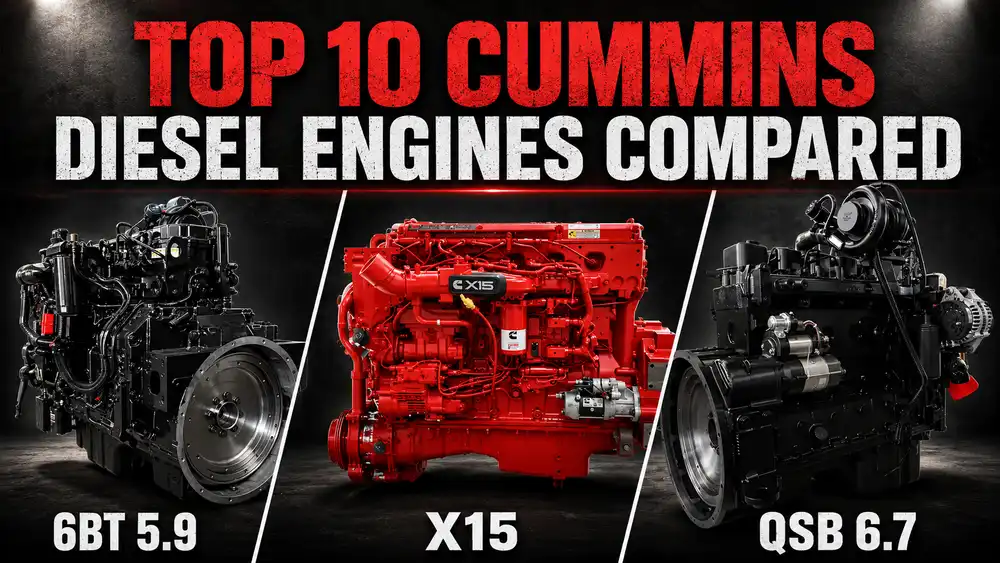
Cummins diesel engines power trucks, construction machines, marine vessels, generators, pumps, farm equipment, and industrial systems. That wide use creates one common problem: many engines share similar names, but they do not always share the same parts.
This guide compares important Cummins engine models by size, power range, common applications, and parts-matching risk. Use it as a practical starting point before choosing an engine, planning a rebuild, or ordering replacement parts.
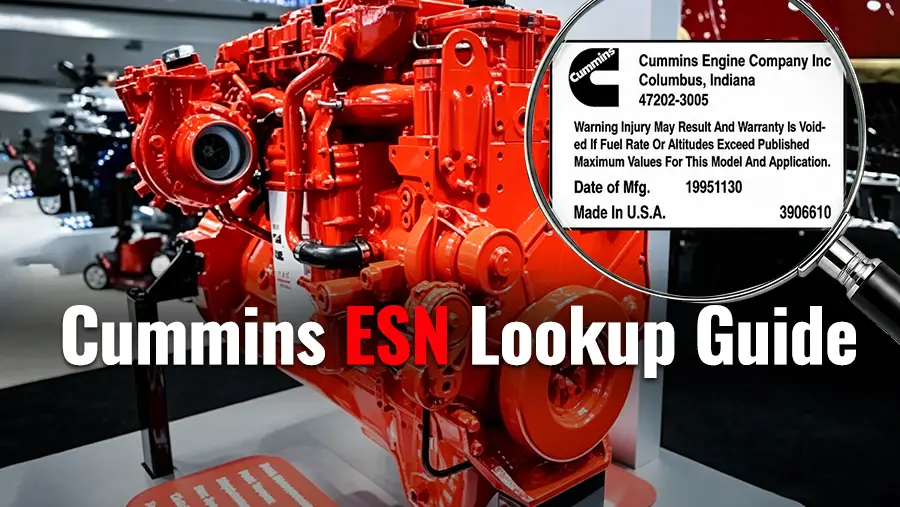
Do not buy parts from the engine name alone. For accurate fitment, confirm the engine serial number, CPL, data plate, old part number, and application before ordering.
Quick Comparison: Popular Cummins Diesel Engines
The table below gives common planning ranges. Exact ratings change by year, CPL, fuel system, emissions level, duty cycle, and application.
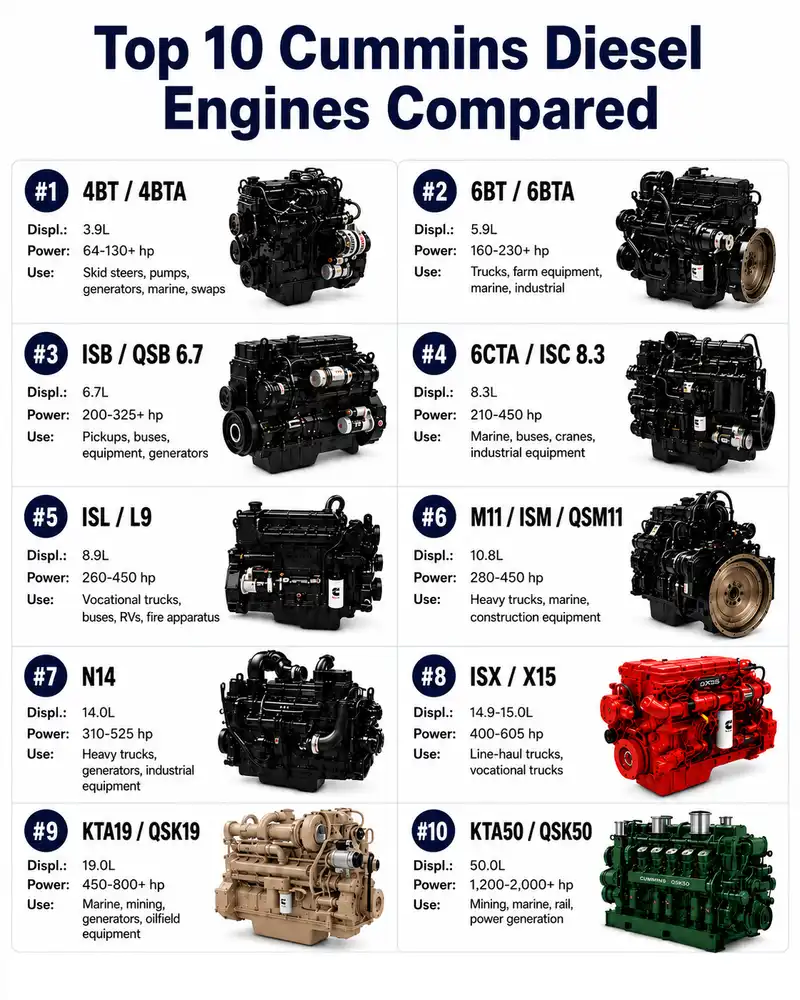
| Cummins Engine | Displacement | Common Power Range | Common Applications | Parts Fitment Risk |
|---|---|---|---|---|
| 4BT / 4BTA | 3.9L | About 64 to 130+ hp | Skid steers, pumps, generators, marine, swaps | High |
| 6BT / 6BTA | 5.9L | About 160 to 230+ hp | Trucks, farm equipment, marine, industrial machines | High |
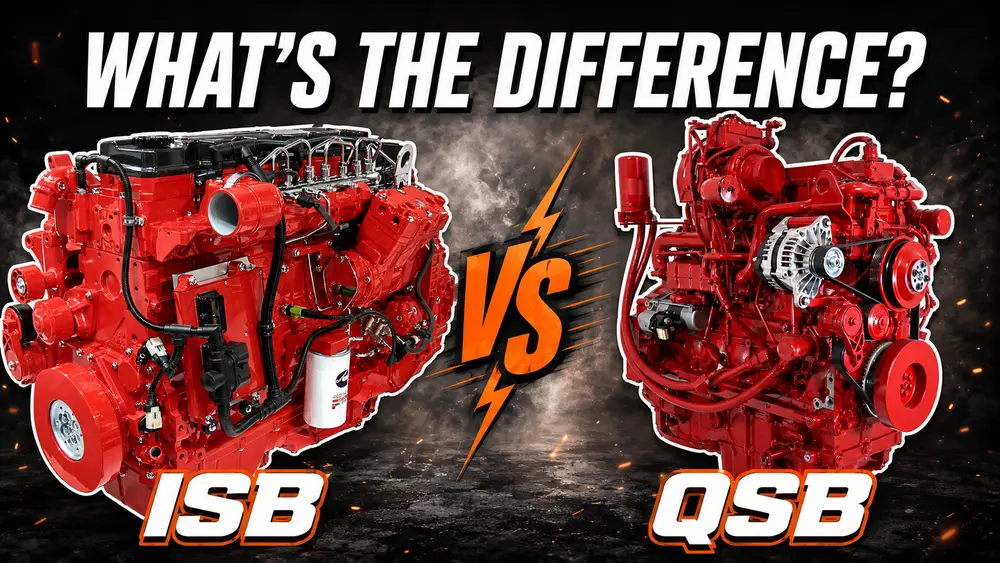
| ISB / QSB 6.7 | 6.7L | About 200 to 325+ hp | Pickups, buses, equipment, generators | High |
| 6CTA / ISC 8.3 | 8.3L | About 210 to 450 hp | Marine, buses, cranes, industrial equipment | High |
| ISL / L9 | 8.9L | About 260 to 450 hp | Vocational trucks, buses, RVs, fire apparatus | Medium to high |
| M11 / ISM / QSM11 | 10.8L | About 280 to 450 hp | Heavy trucks, marine, construction equipment | Medium to high |
| N14 | 14.0L | About 310 to 525 hp | Heavy trucks, generators, industrial equipment | High |
| ISX / X15 | 14.9L to 15.0L | About 400 to 605 hp | Line-haul trucks, vocational trucks | Very high |
| KTA19 / QSK19 | 19.0L | About 450 to 800+ hp | Marine, mining, generators, oilfield equipment | Very high |
| KTA50 / QSK50 | 50.0L | About 1,200 to 2,000+ hp | Mining, marine, rail, power generation | Very high |
How To Read a Cummins Engine Model Name
Cummins model names often tell you the engine family, air system, or electronic generation. They help you narrow the search, but they do not identify every part.
For example, 4BT usually means a 3.9L B Series four-cylinder turbocharged diesel. 6BT usually means a 5.9L B Series six-cylinder turbocharged diesel. QSB, QSC, QSL, and QSK often point to later electronic or industrial versions.
Still, the model name is only the first step. A turbo, injector, fuel pump, water pump, overhaul kit, gasket set, piston, or starter can change by CPL, serial number, rating, and application.
1. Cummins 4BT 3.9L
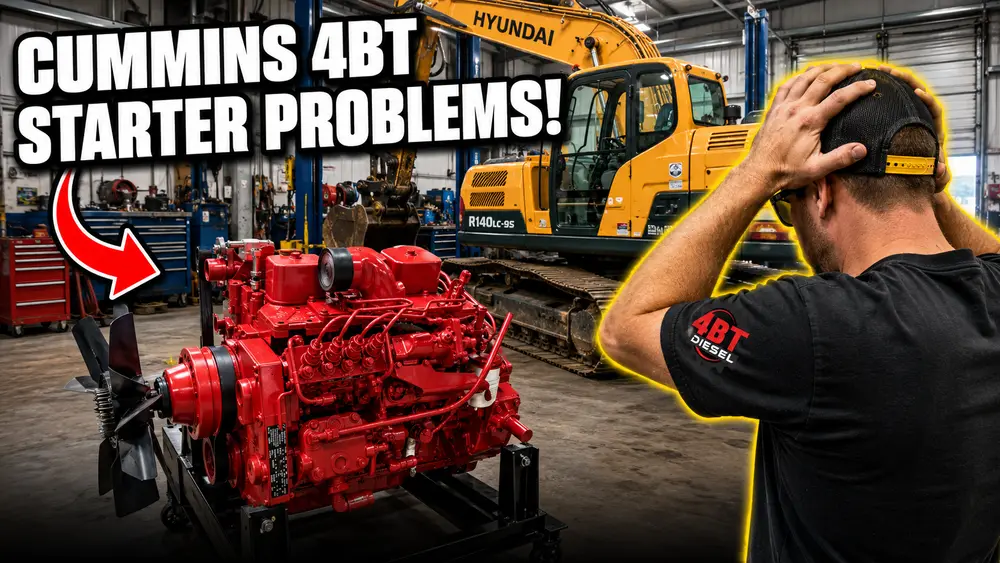
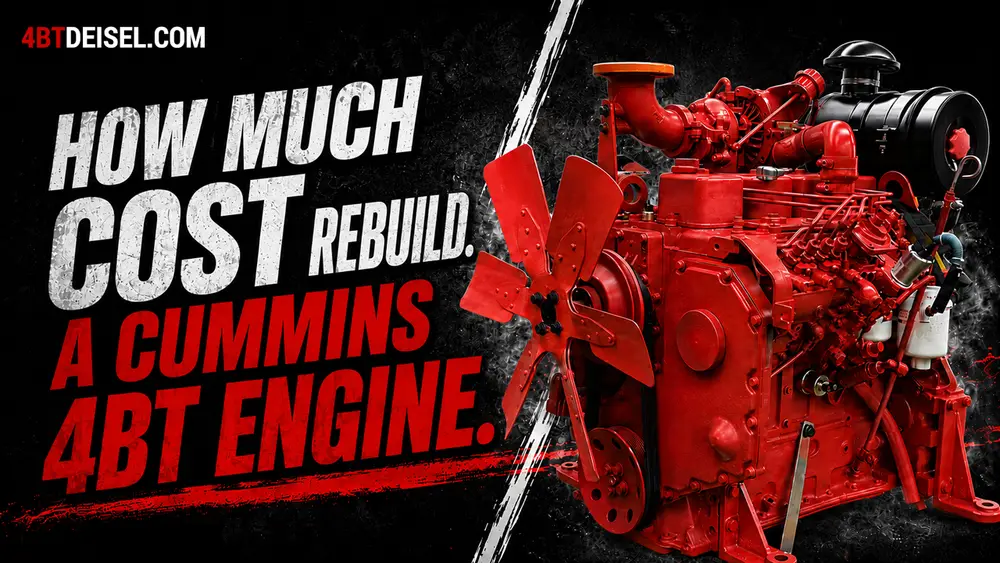
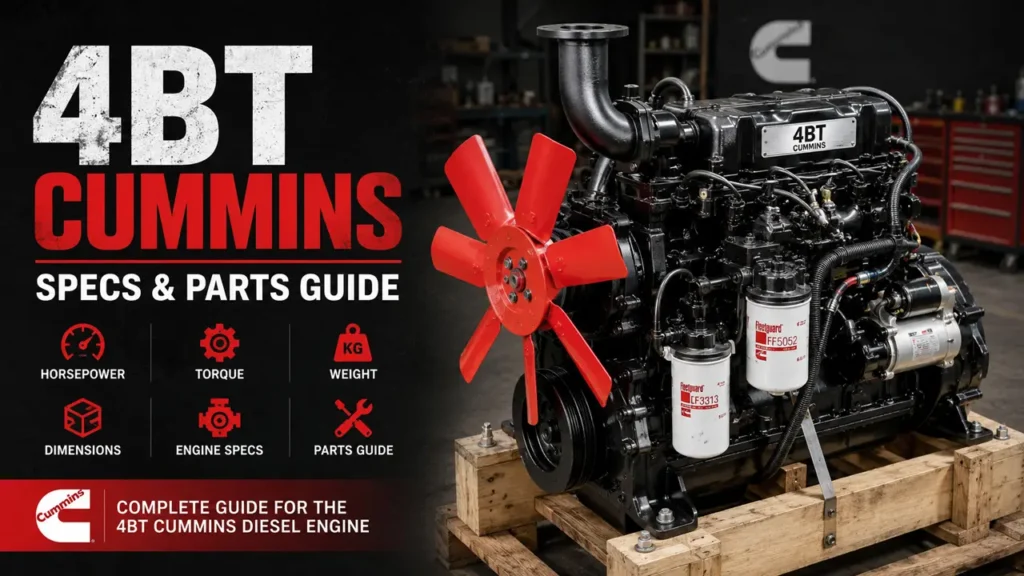
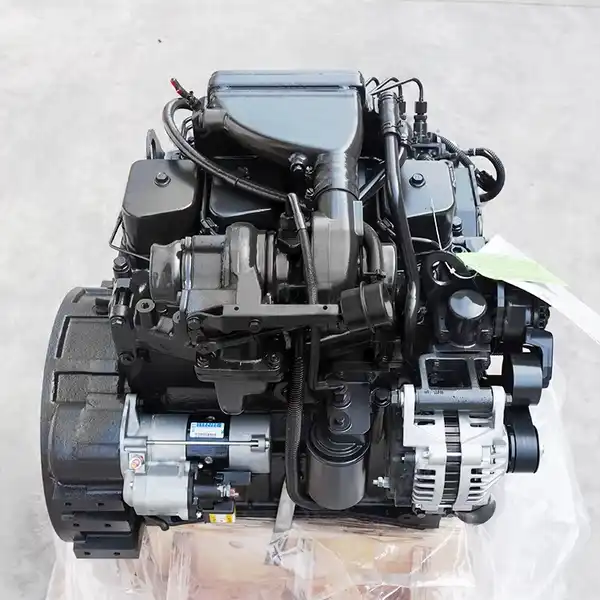
The Cummins 4BT is one of the most searched small industrial Cummins engines. It is a compact 3.9L inline four-cylinder diesel built for torque, durability, and simple service.
The 4BT appears in skid steers, step vans, small construction machines, generators, pumps, marine packages, and engine swaps. Many older versions use mechanical fuel systems, which makes them easier to service in the field.
The tradeoff is vibration. A 4BT is heavy for a four-cylinder engine, and it can shake more than a six-cylinder engine. Mounts, idle speed, gearing, cooling, and accessory alignment matter.
Best fit:
| Best Use | Why It Fits |
|---|---|
| Compact equipment | Strong low-rpm torque in a short engine package |
| Pumps and generators | Simple diesel power for steady work |
| Marine repowers | Compact footprint in tight engine bays |
| Swaps | Mechanical simplicity and broad parts support |
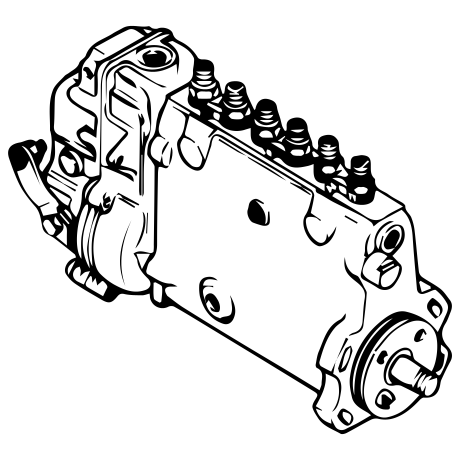
Parts to verify: turbocharger, injectors, injection pump, water pump, starter, thermostat, oil cooler, gasket kit, and overhaul kit.
2. Cummins 6BT 5.9L
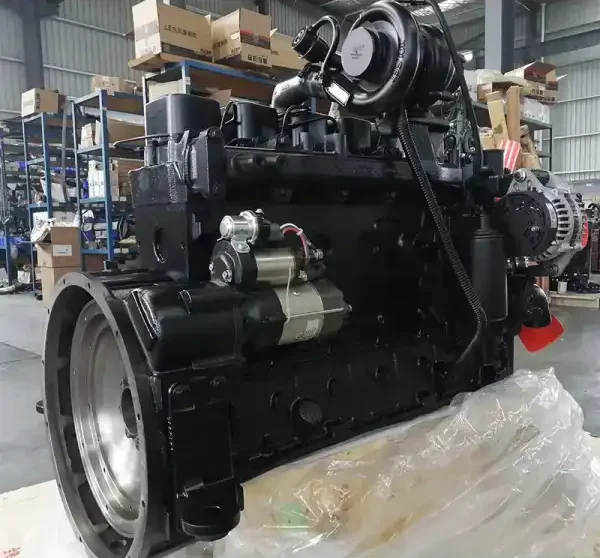
The 6BT 5.9L is one of the most recognized Cummins diesel engines. It shares the B Series foundation with the 4BT, but it adds two cylinders and smoother operation.
The 6BT became famous in Dodge Ram trucks, but it also appears in farm equipment, marine engines, generators, buses, and industrial machines. It is popular because it combines simple service, strong torque, and a huge parts ecosystem.
Many 6BT engines look similar from the outside. Inside, parts can vary by fuel pump type, CPL, piston design, turbo, cooling system, and application.
Best fit:
| Best Use | Why It Fits |
|---|---|
| Farm and construction equipment | Reliable torque and broad service support |
| Marine applications | Strong mid-range power in 5.9L packages |
| Older trucks | Simple mechanical service on many versions |
| Repowers | Strong aftermarket support |
Parts to verify: fuel injection pump, injectors, turbo, head gasket, piston kit, water pump, front cover, oil pump, and rebuild kit.
3. Cummins ISB / QSB 6.7L
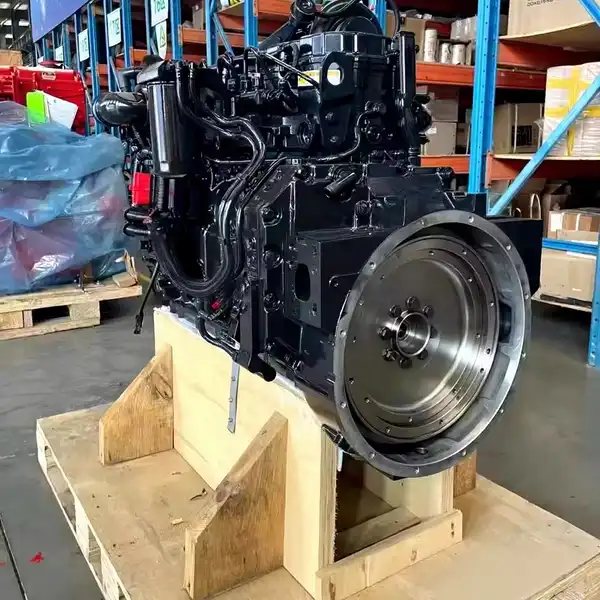
The 6.7L Cummins family builds on the B Series idea with more displacement and modern controls. You will see ISB and QSB versions across pickups, commercial vehicles, buses, generators, and off-highway machines.
The 6.7L can deliver strong power in a compact inline-six layout. It also brings more electronics and emissions equipment than many older mechanical B Series engines.
That makes identification more important. Two 6.7L engines can need different sensors, injectors, turbochargers, aftertreatment parts, ECM settings, and cooling components.
Best fit:
| Best Use | Why It Fits |
|---|---|
| Modern light and medium-duty vehicles | Strong power with electronic control |
| Buses and commercial trucks | Good balance of torque and package size |
| Equipment and generators | Broad industrial availability |
| Fleet repair | Strong parts availability when ESN is known |
Parts to verify: electronic injectors, turbo actuator, sensors, EGR parts, DPF-related parts, water pump, fan hub, and engine harness.
4. Cummins 6CTA / ISC 8.3L
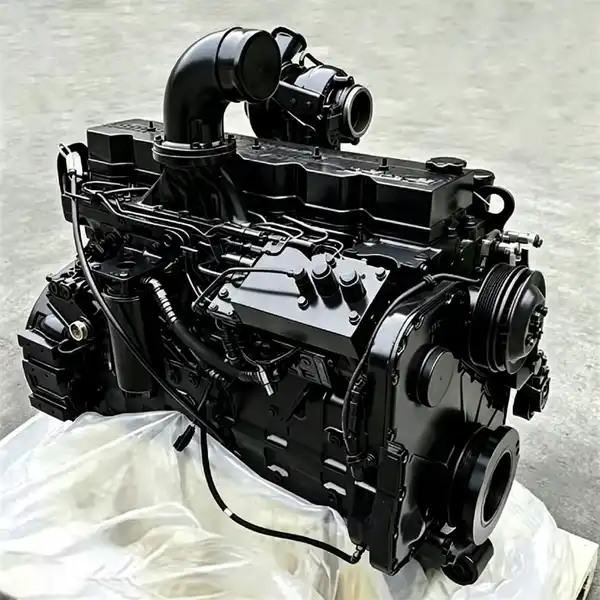
The 8.3L Cummins family fills the space between medium-duty B Series engines and larger heavy-duty engines. The 6CTA and ISC engines are common in marine use, buses, cranes, excavators, pumps, and industrial power units.
This engine family is valued for strong torque and long service life. It can support heavier loads than a 5.9L or 6.7L engine while staying smaller than a 14L or 15L heavy-truck engine.
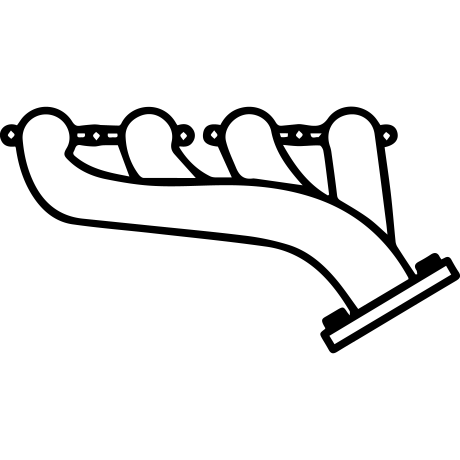
Parts matching can be tricky. Marine, industrial, and on-highway versions may use different cooling systems, turbos, exhaust manifolds, fuel systems, and governors.
Best fit:
| Best Use | Why It Fits |
|---|---|
| Marine engines | Strong torque with many marine-rated packages |
| Construction machines | Good power for mid-size equipment |
| Buses and vocational trucks | Durable medium-heavy platform |
| Generators and pumps | Stable power for industrial duty |
Parts to verify: marine cooling parts, exhaust manifold, turbo, injection pump or electronic fuel parts, cylinder head parts, oil cooler, and overhaul kit.
5. Cummins ISL / L9 8.9L
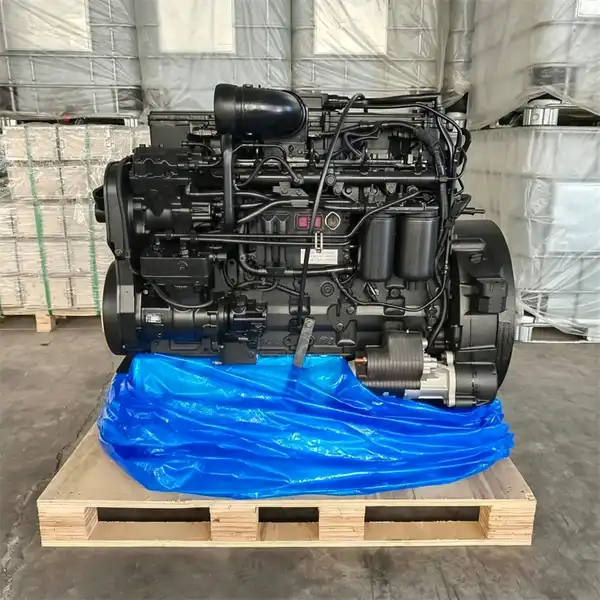
The ISL and L9 engines serve many medium-heavy applications. They are common in buses, RVs, refuse trucks, fire trucks, vocational trucks, and some industrial platforms.
The L9 is often chosen when a fleet needs more torque than a 6.7L engine but does not need the size and weight of an X15. That balance makes it useful in stop-and-go work and vocational duty.
Modern versions can include electronic controls and emissions systems. Always confirm emissions level, CPL, and engine serial number before ordering parts.
Best fit:
| Best Use | Why It Fits |
|---|---|
| Transit and school buses | Good torque in medium-heavy service |
| Fire and emergency vehicles | Strong response under load |
| Refuse and vocational trucks | Built for repeated duty cycles |
| RVs | Smooth power in a compact package |
Parts to verify: injectors, turbo, EGR cooler, sensors, water pump, oil cooler, aftertreatment parts, and engine mounts.
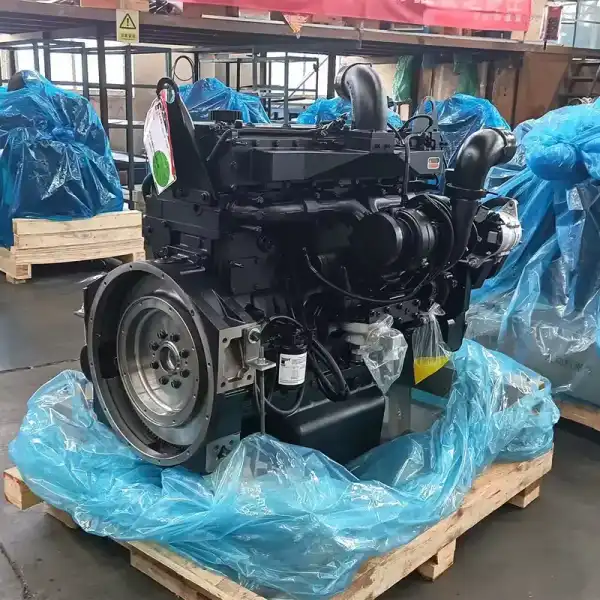
6. Cummins M11 / ISM / QSM11
The M11 family sits in a useful middle ground. It offers more displacement than the L9 family, but it is smaller than the N14, ISX, or X15.
You may see M11, ISM, and QSM11 engines in trucks, marine packages, construction equipment, and industrial applications. These engines can be strong choices when the machine needs steady torque without moving into the largest engine classes.
The parts path depends heavily on the exact model and rating. Industrial and marine versions can differ from truck versions in cooling, exhaust, fuel, and accessory layout.
Best fit:
| Best Use | Why It Fits |
|---|---|
| Heavy equipment | Strong torque without extreme size |
| Marine packages | Common in workboats and commercial use |
| Heavy trucks | Proven platform in older fleets |
| Industrial systems | Good balance of power and durability |
Parts to verify: injectors, cylinder kits, turbo, fuel pump, water pump, exhaust manifold, oil cooler, and bearing sets.
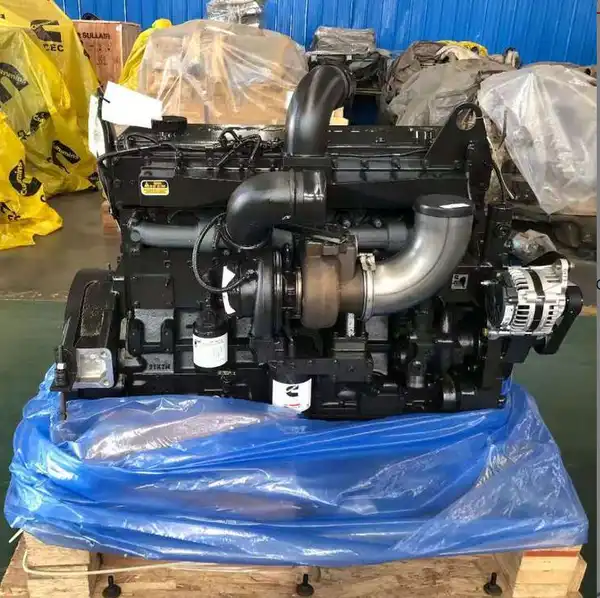
7. Cummins N14
The Cummins N14 is a classic heavy-duty engine. It is known for high-mileage truck service, strong torque, and rebuild support.
The N14 appears in older heavy trucks, generators, and industrial applications. Many shops still support it because the engine has a long service history and a deep parts base.
The challenge is version control. N14 Celect, Celect Plus, and mechanical or application-specific differences affect sensors, injectors, ECM-related parts, and rebuild components.
Best fit:
| Best Use | Why It Fits |
|---|---|
| Older heavy trucks | Proven durability and rebuild support |
| Generators | Strong displacement and steady output |
| Industrial equipment | Heavy-duty torque for demanding work |
| Fleet rebuilds | Parts support remains strong |
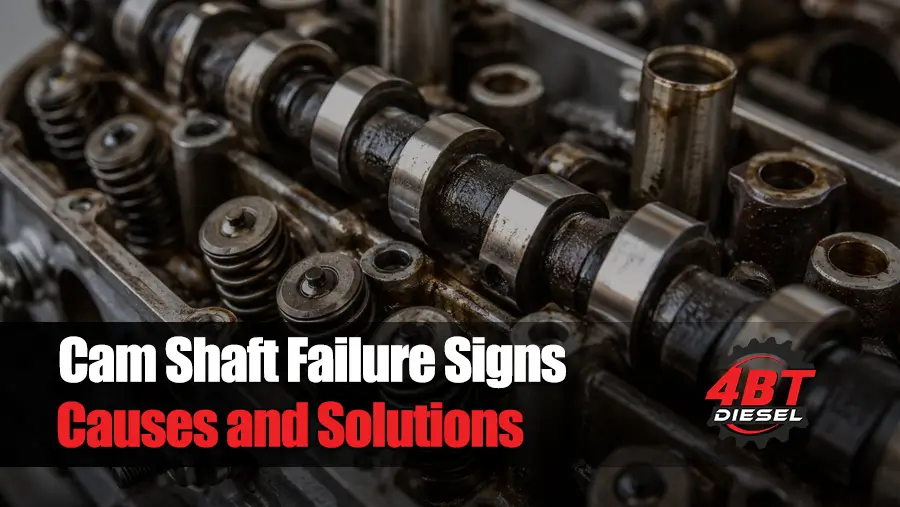
Parts to verify: injectors, cylinder kits, head gasket, rod and main bearings, camshaft parts, sensors, turbo, and oil cooler.
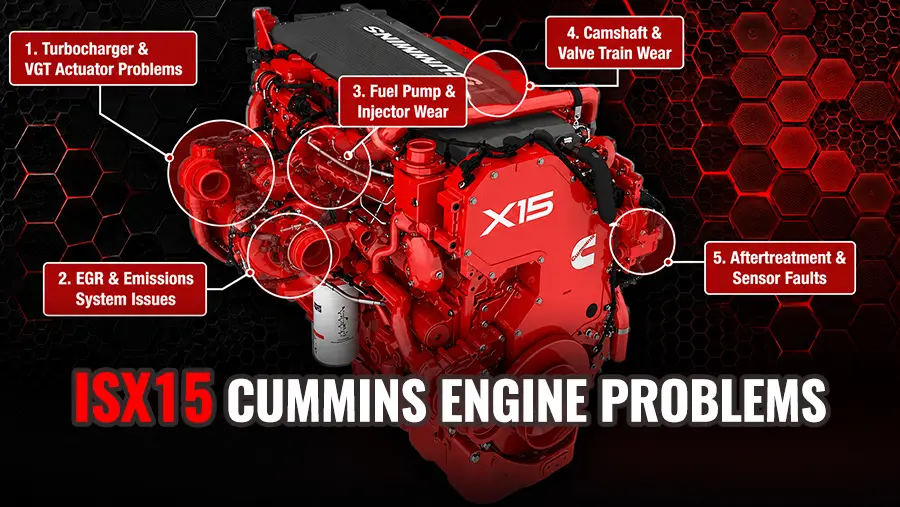
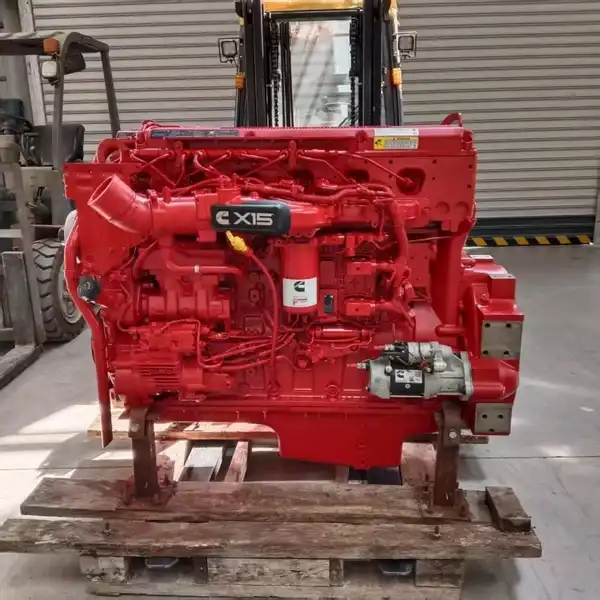
8. Cummins ISX / X15
The ISX and X15 engines are major players in modern heavy trucking. They power line-haul trucks, vocational trucks, and high-load applications.
These engines can make strong horsepower and torque, but they also have complex systems. Fuel injection, turbo control, EGR, DPF, SCR, sensors, and ECM calibration all matter.
For parts buyers, the exact engine serial number is not optional. It is the fastest way to avoid ordering the wrong injector, turbo, sensor, gasket kit, or aftertreatment part.
Best fit:
| Best Use | Why It Fits |
|---|---|
| Line-haul trucks | High power and strong highway torque |
| Vocational trucks | Heavy-duty platform for tough duty cycles |
| Fleet repair | Broad parts network when identified correctly |
| Engine overhaul | Strong rebuild market |
Parts to verify: injectors, turbo, actuator, sensors, EGR cooler, DPF/SCR parts, oil cooler, water pump, and overhaul kit.
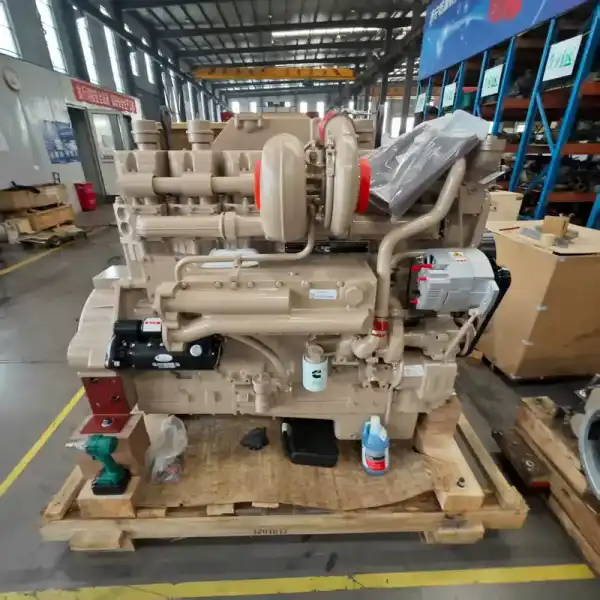
9. Cummins KTA19 / QSK19
The KTA19 and QSK19 engines move into heavy industrial power. They are common in marine vessels, generators, oilfield work, mining equipment, and large pumps.
These engines are built for high-load work. They also carry higher rebuild cost and higher risk if parts are ordered by model name alone.
For a K19-family engine, collect the engine serial number, CPL, old part number, machine model, and photos before ordering. Cooling, fuel, turbo, piston, and gasket differences can be expensive if missed.
Best fit:
| Best Use | Why It Fits |
|---|---|
| Marine workboats | Strong continuous-duty power |
| Generator sets | High-output stationary power |
| Oilfield equipment | Durable torque under heavy load |
| Mining equipment | Heavy-duty industrial service |
Parts to verify: overhaul kit, piston and liner kit, turbo, injectors, fuel pump, water pump, oil cooler, head gasket, and bearings.
10. Cummins KTA50 / QSK50
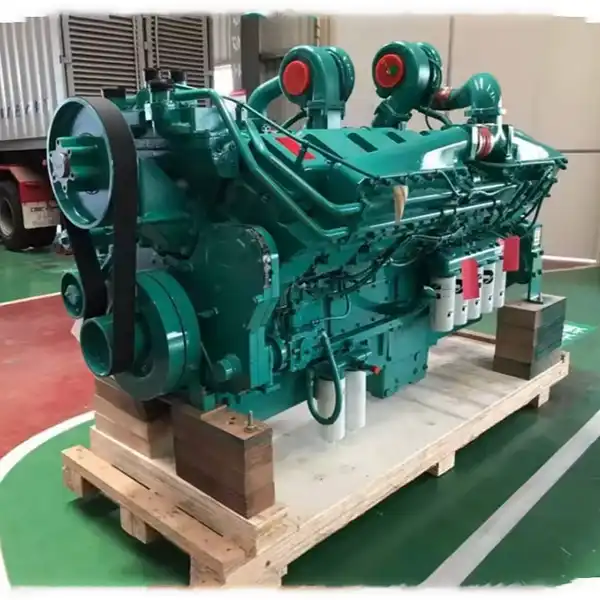
The KTA50 and QSK50 engines are large V16 diesel engines used in serious industrial work. They are not casual replacement engines.
You will find them in mining trucks, large generators, marine vessels, rail, drilling, and heavy power systems. These engines need careful planning because parts, downtime, freight, and labor costs can be high.
For this engine class, documentation is everything. The buyer should confirm the serial number, build list, CPL, rating, service history, and exact component numbers before ordering major parts.
Best fit:
| Best Use | Why It Fits |
|---|---|
| Mining and quarry work | High output for extreme duty |
| Marine and offshore | Large displacement power |
| Power generation | Heavy stationary output |
| Major rebuild projects | Long-life industrial engine platform |
Parts to verify: cylinder kits, heads, bearings, turbos, injectors, cooling system parts, gaskets, oil pumps, and major rebuild components.
Which Cummins Diesel Engine Is Best?
There is no single best Cummins diesel engine. The best choice depends on the job.
Use this decision table:
| If You Need… | Start With These Engines |
|---|---|
| Compact diesel power | 4BT / 4BTA |
| Simple older mechanical service | 4BT or 6BT |
| Medium-duty truck or bus power | ISB/QSB 6.7, ISL/L9 |
| Marine or industrial mid-range power | 6CTA/ISC 8.3, QSM11 |
| Heavy truck power | N14, ISX, X15 |
| Large generator or marine power | KTA19/QSK19 |
| Mining or extreme industrial power | KTA50/QSK50 |
If you are choosing an engine for a repower, look beyond horsepower. Check weight, cooling capacity, engine mounts, flywheel housing, transmission match, emissions rules, and service access.
If you are buying parts, the best engine is the one you can identify correctly.
Parts Matching: The Step Most Buyers Miss
Many visitors search a Cummins engine models list because they want to identify an engine or buy parts. That is smart, but it is not enough.
Cummins engines can vary by year, CPL, rating, market, fuel system, cooling system, emissions level, and application. A 6BT marine water pump may not match a 6BT truck water pump. An ISX injector may not match another ISX injector from a different build.
Use this process before ordering:
Use the engine ID first. Then match the part by system and application.
Locate the tag on the engine block, valve cover, or gear housing area.
Write down the engine serial number, CPL number, and engine model.
Use the tag, casting number, label, or stamped number when available.
Identify the machine, truck, generator, marine package, or industrial use.
Check fuel, air, cooling, block, head, electrical, and mounting details.
Confirm before buying injectors, pumps, turbos, gaskets, sensors, or rebuild kits.
Tip: Send ESN, CPL, old part number, application, and photos when requesting a parts quote.
For help, start with the 4BTDiesel Cummins engine serial lookup guide. You can also send the engine serial number, CPL, old part number, and photos through the Parts quote page.
Common Parts That Need Extra Care
Some parts are high-risk because they look similar across engines.
| Part Group | Why It Needs Verification |
|---|---|
| Overhaul kits | Piston, liner, gasket, bearing, and CPL differences matter |
| Injectors | Rating, nozzle, fuel system, and electronic control can vary |
| Turbochargers | Housing, oil line, actuator, and outlet orientation can change |
| Water pumps | Pulley, rotation, gasket shape, and housing vary |
| Starters | Voltage, tooth count, rotation, and mounting pattern matter |
| Gasket kits | Upper/lower kit split and head gasket thickness can change |
| Oil coolers | Core style and housing match must be checked |
| Sensors | Electronic engines may use different connectors and calibrations |
If you need a complete engine, long block, short block, or major repair group, compare your build with Cummins engine assembly and spare parts options before ordering.
For general replacement categories, browse Diesel engine parts or start from Cummins diesel engines.
Use Official Cummins Resources for Final Checks
A guide like this helps you narrow the engine family and understand common applications. Final fitment still needs engine-specific information.
For official cross-checking, use the Cummins Genuine Cummins Parts catalog and QuickServe Online. You can also review official Cummins engines information when comparing current engine families.
Then match that information with the part number, photos, and application data from your engine.
Final Takeaway
Cummins diesel engines cover everything from compact 3.9L industrial engines to large 50L power units. The engine name tells you where to start, but it does not finish the parts search.
If you are still unsure which Cummins engine parts fit your application, contact 4BTDiesel and our experienced diesel engine engineers can help verify compatibility. Send us your engine nameplate, serial number, CPL, part number, or equipment information, and we will help identify the correct replacement parts before ordering.
That small step protects you from wrong parts, delayed repairs, extra freight, and avoidable downtime.