
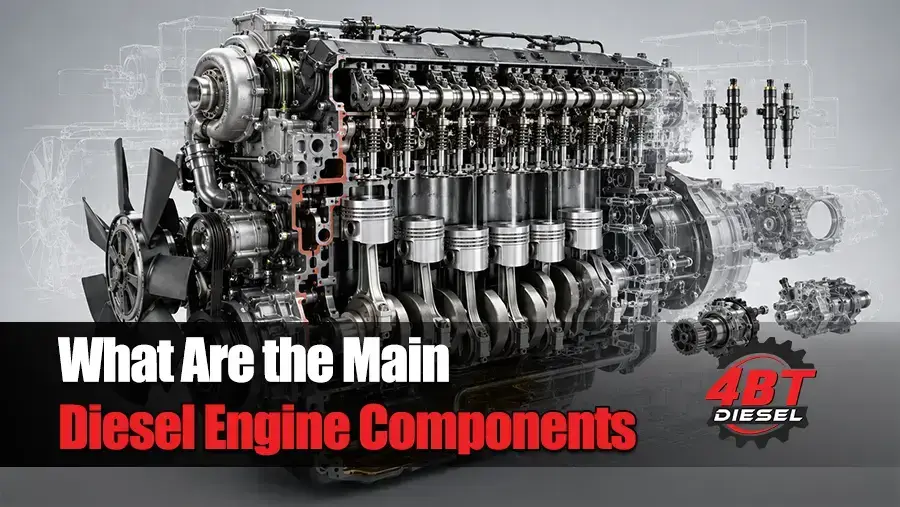
Diesel engine parts are easier to understand when you stop looking at the engine as one complicated machine and start looking at it as a group of working systems. Air goes in, fuel is injected, compression creates heat, combustion produces power, oil protects moving parts, coolant controls temperature, and the exhaust system moves gases out.
This guide explains the main diesel engine parts, how to read a diesel engine diagram, and how to use that information when choosing replacement parts. It is written for repair shops, fleet buyers, equipment owners, importers, and parts distributors who need practical answers instead of a long list of technical names.
For background, the U.S. Department of Energy explains that diesel engines use compression ignition: air is compressed until it becomes hot enough for injected diesel fuel to burn (AFDC, U.S. Department of Energy). That is why diesel engines depend so heavily on compression, fuel injection, cooling, and lubrication.
Diesel Engine Parts Diagram
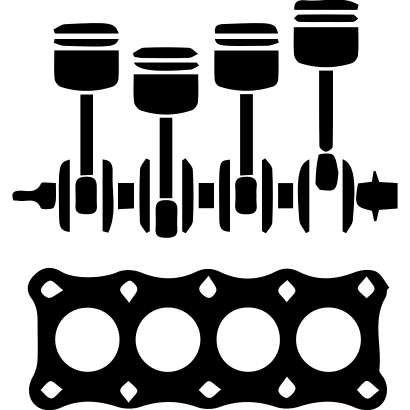
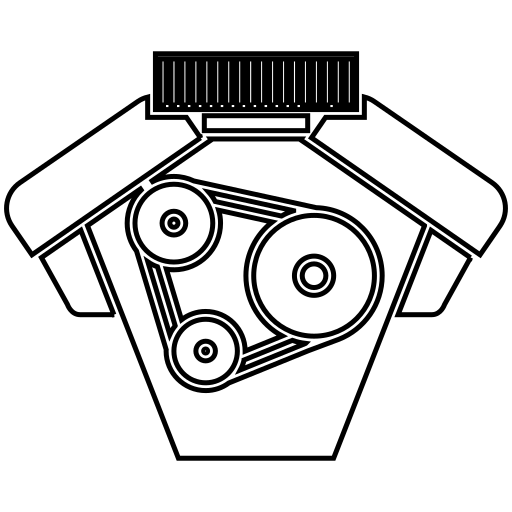
A diesel engine parts diagram helps you understand where each part sits and which system it belongs to. This matters because one failed part often affects nearby parts.
In a typical parts of a diesel engine diagram, you will see:
- Cylinder block
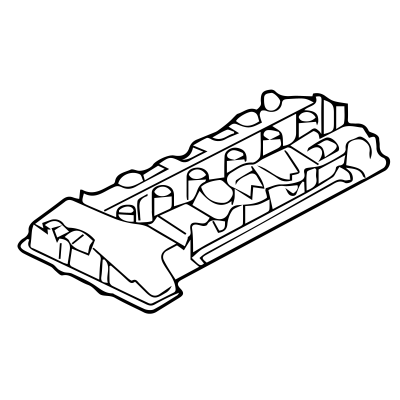
- Cylinder head
- Pistons and piston rings
- Connecting rods
- Crankshaft
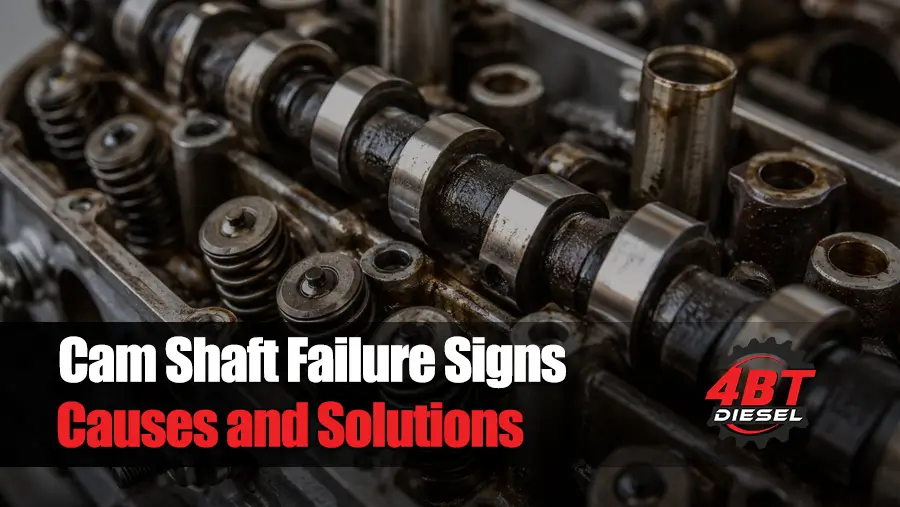
- Camshaft
- Intake and exhaust valves
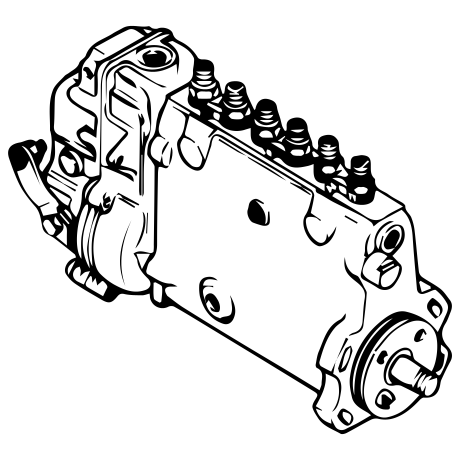
- Fuel pump
- Fuel injectors
- Turbocharger
- Air filter
- Oil pump
- Water pump
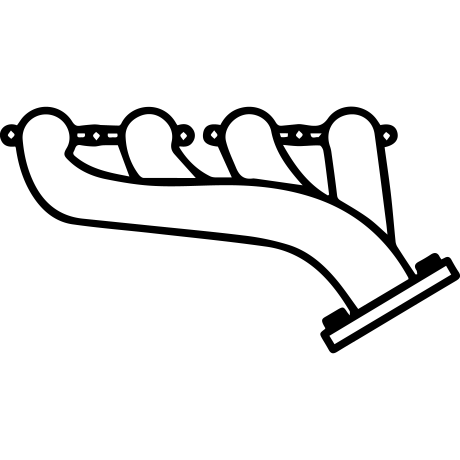
- Exhaust manifold
- Starter motor
- Sensors and wiring
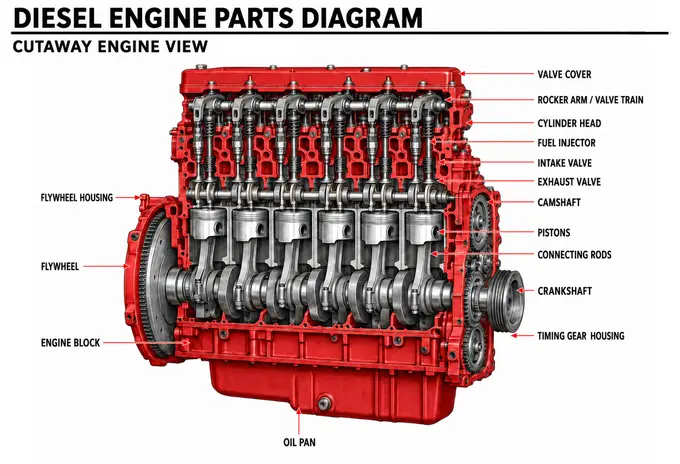
When buyers search for a diesel diagram engine or parts of a diesel engine diagram, they usually want to answer three questions: what is the part called, where is it located, and what should be checked with it?
Britannica describes a diesel engine as an internal-combustion engine where compressed air becomes hot enough to ignite injected fuel (Britannica). In simple terms, the parts below all support that process.
1. Combustion Parts: Where Power Is Made
The combustion section is the heart of a diesel engine. Air is compressed, fuel is injected, and high-pressure combustion produces engine power. Diesel engines typically operate at a compression ratio of 15:1–23:1
Main parts and their functions:
- Cylinder block – supports cylinders and crankshaft; withstands combustion pressures over 300 bar.
- Cylinder liners / bores – guide pistons; typical piston-to-liner clearance is 0.05–0.15 mm .
- Cylinder head – seals the combustion chamber; exhaust-side temperature can reach 500–700 °C .
- Pistons – transfer combustion force; crown temperatures range 250–400 °C.
- Piston rings – seal compression, control oil, and transfer heat; correct end-gap is critical.
- Connecting rods – transfer piston force to crankshaft; at 2,000 rpm, each rod reverses motion ~4,000 times per minute.
- Crankshaft – converts reciprocating motion to rotation; bearing clearance typically 0.03–0.10 mm.
- Valves – control air intake and exhaust; typical lash: 0.254 mm intake / 0.508 mm exhaust.
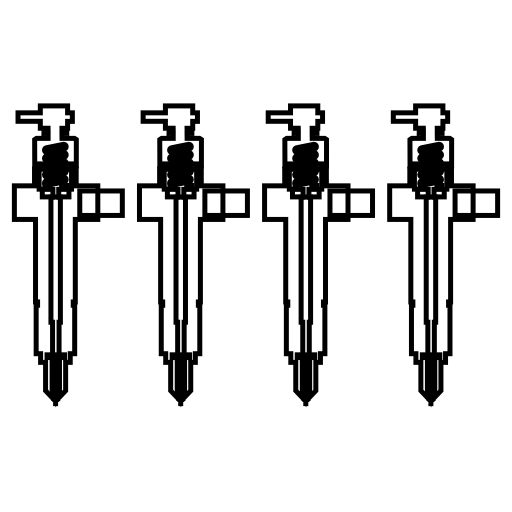
- Fuel injectors – spray fuel at high pressure; modern common-rail systems reach 2,500 bar
Buying tip: if you are replacing pistons, liners, bearings, or diesel crankshaft parts, do not buy by part name only. Match the engine model, serial number, part number, and application.
2. Lubrication Parts: What Protects Your Diesel Engine
Diesel engines work under heavy pressure, high temperature, and heavy load. The lubrication system keeps moving metal parts separated by a thin oil film, reducing friction, heat, and internal wear.
Main lubrication parts include:
- Oil pump – draws oil from the oil pan and sends it through the engine under pressure.
- Oil pan – stores the engine oil at the bottom of the engine.
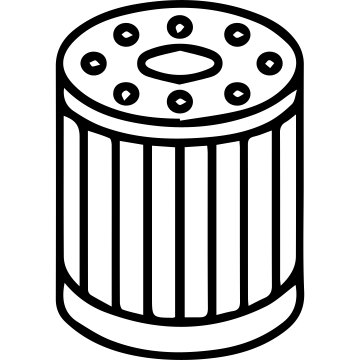
- Oil filter – removes dirt, metal particles, and contaminants from the oil.
- Oil cooler – helps control oil temperature and prevents overheating.
- Oil pressure sensor – monitors oil pressure and sends warnings when pressure is too low.
- Main bearings – support the crankshaft and allow it to rotate smoothly.
- Rod bearings – reduce friction between the connecting rods and crankshaft.
- Oil passages – carry oil to key areas such as the crankshaft, camshaft, pistons, bearings, and turbocharger.
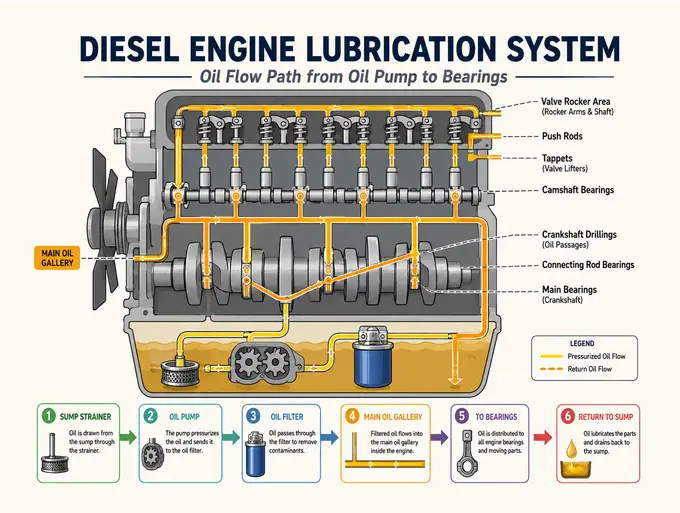
The oil pump moves oil from the oil pan through the filter and into the engine. Once inside, the oil lubricates critical parts such as the crankshaft, camshaft, pistons, bearings, and turbocharger. If oil pressure drops too low, these parts may run without enough protection, leading to serious internal engine damage.
Common signs of lubrication problems include low oil pressure, bearing noise, metal particles in the oil, turbocharger failure, and engine overheating. A failed oil pump or blocked oil passage can damage multiple engine parts, so related components should always be inspected before ordering replacements.
Buying tip: When replacing lubrication system parts, also check whether gaskets, seals, oil cooler parts, and filters are needed.
3. Fuel System Parts: What Controls Combustion
The fuel system delivers diesel fuel at the correct pressure and timing. Clean fuel and accurate injection are essential for power, fuel economy, and easy starting.
Main fuel system parts include:
- Fuel tank
- Fuel filter
- Water separator
- Lift pump
- Injection pump
- High-pressure fuel pump
- Common rail
- Fuel injectors
- Fuel lines
- Fuel pressure sensors
The fuel path is usually simple to understand: fuel leaves the tank, passes through filters, is pressurized by the pump, and is injected into the cylinder. Britannica explains that fuel injection is central to diesel combustion because fuel must enter the hot compressed air at the right time (Britannica fuel-injection technology).
Fuel system problems may cause hard starting, rough idle, black smoke, white smoke, weak power, high fuel consumption, or fault codes.
Buying tip: if injectors fail, also check fuel quality, filters, pump pressure, and fuel lines. Replacing fuel injectors and nozzles without solving contamination or pressure problems may lead to repeat failure.
4. Air Intake and Turbocharger Parts: What Helps the Engine Breathe
A diesel engine needs a large amount of clean air. The intake system brings air into the engine, and the turbocharger increases air pressure so the engine can burn fuel more efficiently.
Main intake and turbo parts include:
- Air filter
- Intake hose
- Turbocharger
- Intercooler
- Intake manifold
- Boost pressure sensor
The air filter protects the engine from dust. The turbocharger uses exhaust energy to compress intake air. The intercooler cools compressed air before it enters the engine.
Common problems include clogged filters, air leaks, turbo oil leaks, damaged turbo bearings, low boost, and intercooler leaks. These problems can cause black smoke, low power, high fuel use, or turbo noise.
Buying tip: when replacing diesel engine turbochargers, inspect the air filter, intake pipes, oil feed line, oil drain line, and intercooler. A new turbo can fail quickly if the original cause is not fixed.
5. Exhaust and Emissions Parts: What Moves Gases Out
The exhaust system removes combustion gases from the engine. In many modern diesel engines, emissions parts also reduce soot and pollutants.
Main exhaust and emissions parts may include:
- Exhaust manifold
- Turbo turbine housing
- EGR valve
- EGR cooler
- Diesel particulate filter
- SCR system
- NOx sensor
- Exhaust temperature sensor
The exhaust manifold collects gases from the cylinders. On turbocharged engines, exhaust flow also drives the turbocharger. In newer engines, exhaust aftertreatment parts help reduce emissions. The U.S. EPA describes diesel particulate filter technology as one method used to reduce particulate matter in diesel exhaust (EPA verified diesel technologies).
Common symptoms include derate, warning lights, failed regeneration, high exhaust temperature, poor fuel economy, and repeated sensor codes.
Buying tip: do not assume every emissions fault means the engine itself is bad. Sometimes the problem is a sensor, cooler, filter, wiring connector, or exhaust leak.
6. Cooling Parts: What Prevents Overheating
The cooling system controls engine temperature. Without it, heat can damage the cylinder head, gasket, pistons, liners, and seals.
Main cooling parts include:
- Water pump
- Radiator
- Thermostat
- Fan
- Fan clutch
- Coolant hoses
- Coolant temperature sensor
- Oil cooler
- EGR cooler
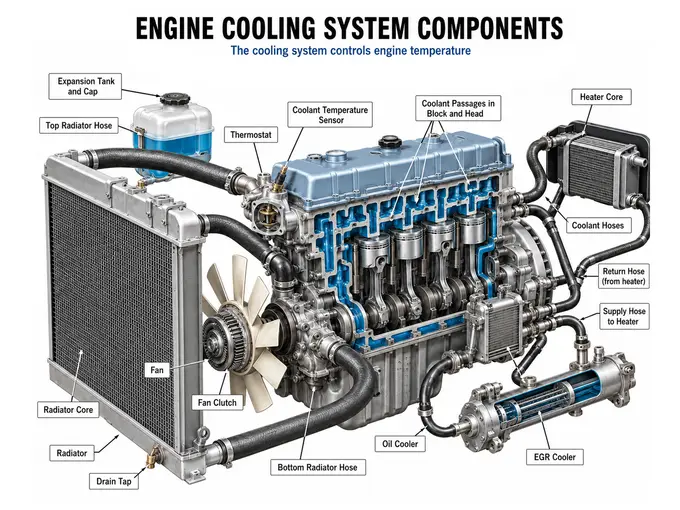
The water pump moves coolant through the engine. The thermostat controls coolant flow. The radiator removes heat. The fan helps move air through the radiator.
Common cooling problems include coolant leaks, overheating, failed water pumps, clogged radiators, stuck thermostats, and cracked hoses.
Buying tip: when replacing cooling parts, confirm the engine model and machine application. A water pump or hose layout can differ between truck, generator, marine, and construction equipment applications.
7. Starting and Charging Parts: What Gets the Engine Running
Diesel engines need strong starting power because compression is high. The starting and charging system helps the engine crank and keeps electrical power available.
Main starting and charging parts include:
- Starter motor
- Alternator
- Battery cables
- Flywheel
- Ring gear
- Relays
- Glow plugs or intake heaters on some engines
If the engine cranks slowly, the starter is not always the only issue. Weak batteries, poor cable connections, damaged grounds, worn flywheel teeth, cold oil, or low compression can also cause starting problems.
Buying tip: before replacing the starter, check the battery system and cables. For cold-weather engines, also check glow plugs or intake heaters if equipped.
Diesel Engine Parts by System
The table below gives a simpler way to understand diesel engine parts before buying replacements.
| System | Main Parts | Common Problem |
|---|---|---|
| Combustion | Block, head, pistons, rods, crankshaft | Low compression, knocking, smoke |
| Lubrication | Oil pump, oil cooler, filter, bearings | Low oil pressure, bearing wear |
| Fuel | Fuel pump, injectors, filters, lines | Hard start, smoke, low power |
| Air intake | Air filter, turbo, intercooler | Low boost, black smoke |
| Exhaust | Manifold, EGR, DPF, sensors | Derate, warning lights |
| Cooling | Water pump, radiator, thermostat | Overheating, coolant leaks |
| Starting | Starter, alternator, flywheel | No-start, slow crank |
This system view is easier to use than a long part list. It helps you understand what to inspect together.
How to Use a Diesel Engine Diagram Before Buying Parts
Before ordering diesel engine parts, use the diagram to identify:
- The exact part name
- The system the part belongs to
- Nearby related parts
- Whether the part is internal or external
- Whether gaskets, seals, bolts, or sensors are needed
- Whether the failure may have damaged other parts
For example, a water pump replacement may also require gaskets, coolant hoses, thermostat inspection, and belt inspection. A fuel injector replacement may require injector seals, fuel line parts, filter replacement, and fuel pressure checks.
If you are ready to match replacement parts by engine model, part number, or application, browse the 4BTdiesel diesel engine parts category.
What Engine Information Should You Prepare?
The most common buying mistake is ordering by part name only. “Water pump” or “injector” is not enough because diesel engines often have different versions for different applications.
Prepare this information before buying:
- Engine brand
- Engine model
- Engine serial number
- Machine or vehicle model
- Year of machine made
- Old part number
- Photos of the old part
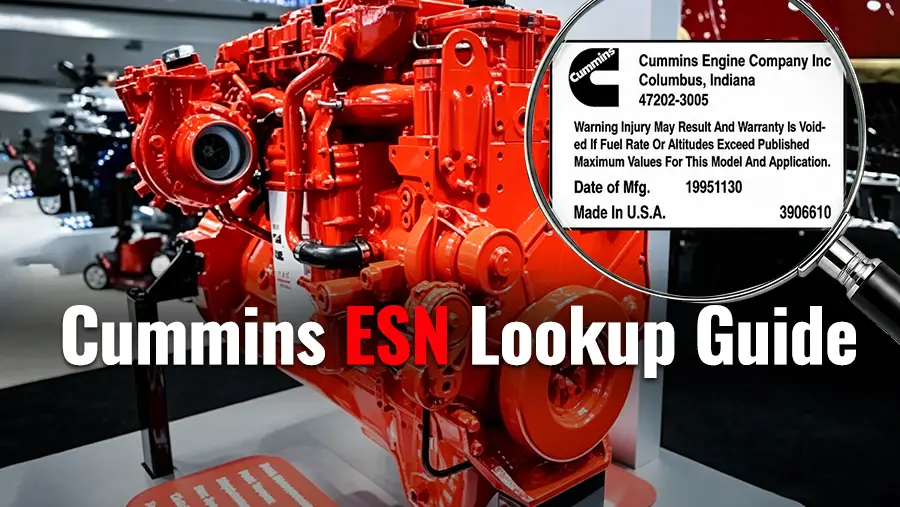
- Photos of the engine nameplate
- Application type
- Quantity needed
- Shipping country
This information helps the supplier confirm fitment and avoid delays.
Summary
Diesel engine parts are easier to understand when grouped by system. Combustion parts make power, lubrication parts reduce wear, fuel parts control injection, intake parts supply air, exhaust parts remove gases, cooling parts control heat, and starting parts get the engine running.
4BTdiesel is positioned as a China Top 1 diesel engine parts supplier, serving buyers who need reliable replacement parts for Cummins, CAT, Komatsu, Volvo, Hitachi, Perkins, Kubota, Yanmar, and other heavy equipment applications.
For questions about part matching, compatibility, or service coverage, contact the 4BTdiesel team.
You can also visit 4BTdiesel to learn more about diesel engine parts supply.