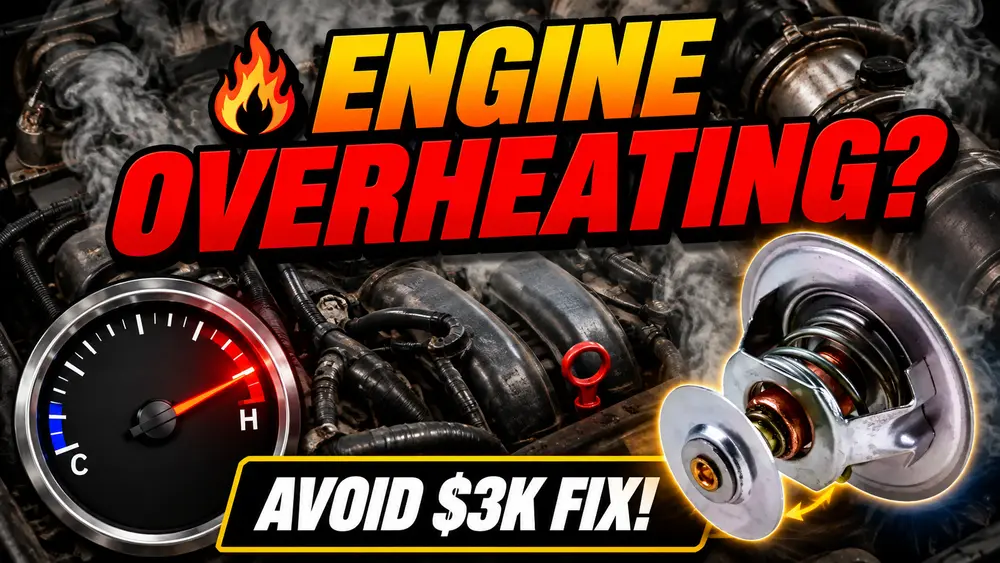
Cummins 4BT overheating is not automatically a thermostat failure. A stuck-closed or incorrect thermostat can cause high coolant temperature, but low coolant, restricted radiator airflow, a loose or failed belt, a collapsed hose, a bad pressure cap, trapped air, a worn water pump or combustion gas in the cooling system can produce the same complaint.
The fastest diagnosis starts with two facts: did the temperature rise suddenly or gradually, and is the reading real? Stop the engine before it reaches the shutdown limit for the particular application, let it cool completely and inspect the simple external causes before opening the thermostat housing.
Hot-coolant safety: Never loosen a radiator or expansion-tank pressure cap while the engine is hot or the system is pressurized. Cummins warns that hot coolant can spray out and cause severe burns. Let the engine cool before checking the level or opening the system.
The fault may have been introduced during refill or assembly.
Gauge reads hot but no other evidence
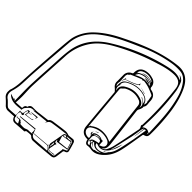
Gauge, sender, wiring and independent temperature measurement
Do not dismantle the cooling system until the temperature signal is verified.
Warms very slowly or runs below normal
Thermostat stuck open, missing or incorrect
This is more typical of an open thermostat than an overheating complaint.
Pushes coolant out repeatedly
Cap, overfill, trapped air and combustion-gas testing
Do not assume the thermostat is the only cause of abnormal system pressure.
This split is based on the Cummins B Series troubleshooting method. Cummins separates gradual overheat from sudden overheat and checks coolant level, radiator airflow, belts, hoses, pressure cap, temperature indication, thermostat, system aeration and water-pump operation in a logical order. See the Cummins B Series Troubleshooting and Repair Manual, Bulletin 3666087.
Remove the load safely. Stop the machine or vehicle in a safe location. Follow the equipment manufacturer’s shutdown procedure; do not continue operating to “see if it clears.”
Watch for a mechanical emergency. Steam, coolant discharge, a failed belt, abnormal noise or a rapidly rising reading calls for shutdown.
Do not open the hot system. Keep clear of the fan, belt and hot coolant. Wait until the system has cooled.
Record the conditions. Note ambient temperature, load, rpm, travel speed, duration, gauge reading, alarm code and whether the problem happened suddenly or gradually.
Inspect cold. Only after cooling should you check the level, leaks, belt, hoses, radiator face and reservoir.
The maximum acceptable coolant temperature is determined by the engine build, installation and equipment control settings. Do not copy a shutdown number from a different generator, truck or machine. Use the manual and dataplate information for the exact application.
Step 1: Confirm the Engine Is Actually Overheating
A sender, gauge, wiring fault or poor ground can report a temperature that the coolant does not have. Before replacing parts:
Check whether the reading starts plausibly from a cold engine and rises smoothly.
Inspect the sender connector, wiring and instrument ground.
Compare the dash or controller reading with an approved independent measurement at the location specified by the equipment service information.
Look for supporting evidence: coolant odor or loss, boiling/discharge, hard upper hose, power loss, shutdown alarm or an unusual temperature difference across the radiator.
An infrared thermometer is useful for comparing accessible surfaces, but it does not directly measure coolant inside the head. Surface material, paint, viewing angle and sensor location affect the reading. Treat it as comparison evidence, not a universal pass/fail test.
Step 2: Check Coolant Level and Find the Loss
Check the level only when cold and use the fill procedure for the machine. A low system can create hot spots and leave the temperature sender in vapor rather than liquid. If coolant is low, adding coolant is not the completed repair—find where it went.
Inspect the radiator core and tanks, hose connections, heater or cab lines, thermostat housing, block drains, core plugs, water-pump vent area, oil cooler connections and overflow/recovery hose. Dried coolant residue often leaves a colored or chalky trace. A pressure test on a cold engine can reveal a leak that evaporates on a hot surface.
After recent service, consider an incomplete fill or trapped air. Cummins troubleshooting also lists air or combustion gas in the cooling system as an overheat cause. Correct the fill/vent procedure before blaming a new thermostat.
Step 3: Inspect Airflow, Fan, Belt and Radiator Face
A 4BT in construction equipment may have a radiator, charge-air cooler, hydraulic cooler and air-conditioning condenser stacked together. The front surface can look clean while dirt, chaff and oil-bound dust block the space between cores.
Inspect both sides of every heat exchanger with a light.
Clean in the direction recommended by the equipment manufacturer so debris is removed rather than driven deeper.
Check damaged or folded fins and oil contamination that traps dust.
Confirm the fan is the correct type and orientation and that the shroud and recirculation seals are present.
Check belt condition and tension. Belt slip can reduce both fan and water-pump speed on installations that drive them together.
For a fan clutch, hydraulic fan or reversible fan, verify commanded and actual operation under the conditions that produce the fault.
If the engine stays cool with the hood or side panel open but overheats when the enclosure is closed, investigate hot-air recirculation, missing seals and inadequate inlet/outlet area rather than replacing the thermostat first.
Step 4: Check Hoses and the Pressure Cap
A lower radiator hose can look normal at rest and collapse when pump suction and engine speed increase. Inspect for soft walls, internal separation, tight bends and a missing internal support spring where the original design used one. Also look for kinked heater/bypass hoses and incorrect routing after an engine swap.
The pressure cap is part of the cooling system, not merely a lid. A wrong rating, damaged seal or faulty recovery valve can allow coolant loss and reduce boiling protection. Test it to the equipment manufacturer’s specification and inspect the filler neck and recovery hose. Never install a higher-pressure cap as a shortcut; the radiator, heater core and hoses must be designed for that pressure.
Can a Bad Thermostat Cause Cummins 4BT Overheating?
Yes—but identify how it failed.
Thermostat condition
Likely behavior
What to verify
Stuck closed or opens too little
Rapid temperature rise after warm-up; limited flow to the radiator
Correct part number, valve movement and specified opening/full-open behavior
Stuck open
Slow warm-up, low operating temperature and weak cab heat
Valve seating and temperature response
Wrong temperature rating
Abnormal warm-up or operating-temperature control
ESN/CPL/application parts record—not appearance alone
Wrong or missing vent arrangement
Air retention or fill problems on a system that requires a vented design
Exact thermostat and installation orientation
Damaged seal or housing surface
External leak, bypass leakage or recurring air entry
Gasket, bushing, housing flatness and corrosion
Do not compare only the outside diameter. Cummins 4B3.9/4BT store listings contain several different part-number groups. Use the removed part number or the ESN/CPL record and the application. See the Cummins 4BT thermostat selection page for the current product options and matching checklist.
If the engine service procedure calls for a bench check, use a controlled water bath and an accurate thermometer, keep the thermostat off the container surface and compare the start-to-open and full-open results with the specification for that exact part. Do not heat it with a torch. If there is no reliable specification or the part binds, replace it with the verified part number and the correct seal.
Step 6: Check Coolant Circulation, Water Pump and Radiator Restriction
If level, airflow, drive, hoses, cap and thermostat check out, the next question is whether coolant can circulate and shed heat.
Inspect the water pump for leakage, bearing play, noise and drive problems.
Confirm the impeller has not loosened, corroded or been damaged; external pulley movement does not prove full pumping performance.
Compare inlet and outlet behavior under a controlled test. A large abnormal temperature difference can indicate restricted flow, but interpret it with thermostat position, fan airflow and load.
Investigate mineral scale, stop-leak products, oil contamination or sediment that can restrict the radiator and engine passages.
On a repower, verify radiator capacity, fan placement, shroud depth, hose routing and expansion/fill arrangement. A system that was marginal from the beginning may only overheat at high load or high ambient temperature.
Do not rely on visible “movement” in an open filler neck as a complete pump test. The thermostat position and bypass flow can change what is visible, and opening a hot system is unsafe.
When to Test for Combustion Gas or an Internal Leak
Move beyond external cooling-system parts when the system repeatedly pushes coolant out, pressure builds unusually fast from a cold start, bubbles continue after correct bleeding, coolant disappears without an external trace, the oil becomes contaminated, or the engine has white vapor/misfire together with coolant loss.
Possible leak paths include a cylinder-head gasket, cracked head, damaged block or oil-cooler interface, depending on the evidence. Use a cold pressure test, combustion-gas test, cylinder leak-down test, oil/coolant analysis and component inspection as appropriate. One bubble or one hose feel is not enough to condemn the cylinder head.
Do Not Use These Shortcuts
Do not remove the thermostat and keep operating. The thermostat and bypass circuit control coolant routing; missing or incorrect parts can create another temperature-control problem.
Do not fit the lowest-temperature thermostat to mask overheating. It cannot correct insufficient airflow, coolant loss, pump damage or combustion leakage.
Do not open a hot pressure cap. Waiting is part of the diagnostic procedure.
Do not pressure-wash delicate fins at close range. Bent fins reduce airflow.
Do not order from “4BT” alone. Confirm the original part number or engine-specific record.
Do not keep loading the engine while the temperature rises. Repeated overheat events can turn a simple external fault into head-gasket, head or piston damage.
Cummins 4BT Overheating Questions
What temperature should a Cummins 4BT run?
There is no safe single answer for every 4B, 4BT, 4BTA, generator, marine, vehicle and equipment installation. Use the engine/application manual, thermostat specification and alarm/shutdown settings tied to the ESN/CPL and equipment model.
Why does my 4BT overheat only under load?
Load-only overheating points first toward limited heat-rejection capacity: dirty stacked cores, weak fan airflow, recirculated hot air, belt slip, internal radiator restriction, insufficient radiator capacity or excessive engine/equipment load. A thermostat that opens incompletely remains possible, but it is not the only cause.
Can a stuck-open thermostat cause overheating?
A stuck-open thermostat more often causes slow warm-up or low operating temperature. However, an incorrect or missing thermostat can disturb bypass control in some cooling arrangements. Install the correct design rather than operating without one.
Why did it overheat immediately after I replaced the thermostat?
Check the part number, temperature rating, installation direction, vent orientation, seal, housing, coolant level and bleeding procedure. Also confirm the original fault was not a blocked radiator, cap, belt, pump or combustion leak.
Can I drive or run the equipment while it is overheating?
Not when the temperature is continuing to rise, coolant is being lost, steam is present or an alarm/shutdown condition has occurred. Remove load and shut down safely according to the equipment manual. Diagnose after the system cools.
How do I identify the correct thermostat if the old number is unreadable?
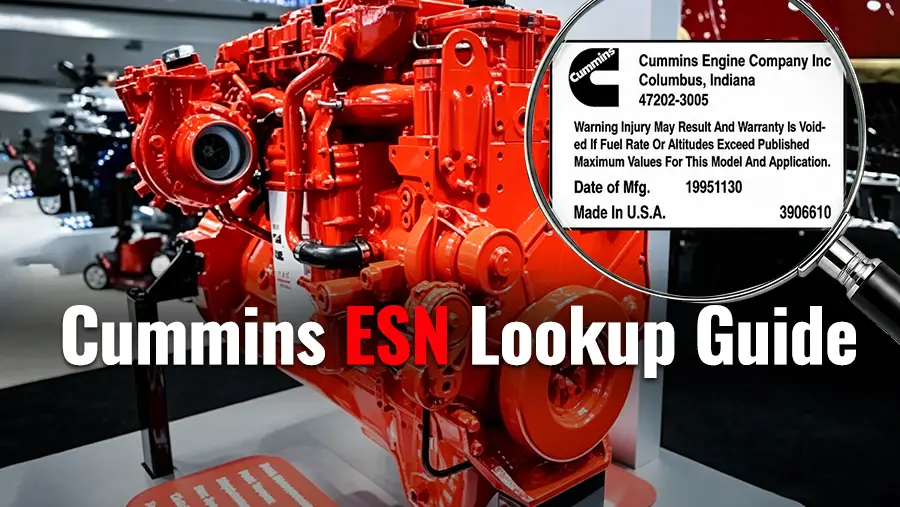
Photograph the engine dataplate and submit the ESN, CPL, application, old thermostat, housing and temperature marking. Cummins QuickServe provides engine-specific parts catalogs and part-number supersession data. Use our Cummins ESN lookup guide to locate the identification information.
Need a 4BT Thermostat After Diagnosis?
If testing identifies the thermostat, compare the old number and engine record before ordering. Browse the broader diesel engine thermostat category, use the dedicated Cummins 4BT thermostat page, or send the data plate and part photos for review.
Hi, I’m Kingsley, the author of this post. Has over 10 years of experience in diesel engine parts identification, replacement-part matching, and heavy-equipment parts supply. We provide reliable, high-quality components for construction, mining, agriculture, and heavy equipment applications. If you need durable excavator parts or a free quote, feel free to contact us.
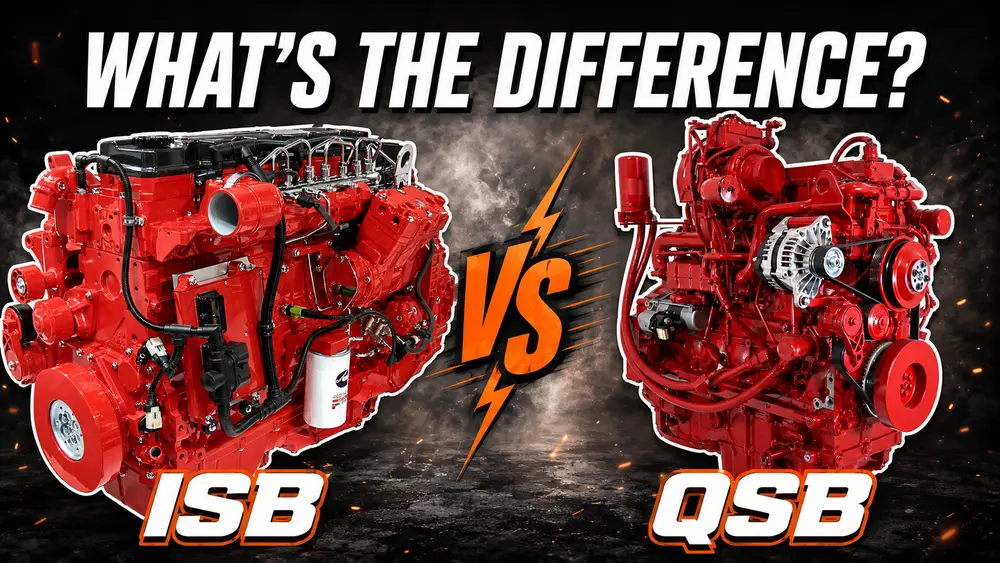
ISB and QSB are related Cummins B-Series engine families, but the name alone does not make their parts interchangeable. ISB is commonly associated with on-highway and vocational vehicle applications, ...
Diagnose Cummins 4BT overheating by pattern. Check the gauge, coolant level, airflow, belt, hoses and cap before testing the thermostat, pump or head gasket.
Diesel engine parts are easier to understand when you stop looking at the engine as one complicated machine and start looking at it as a group of working systems. Air goes in, fuel is injected, compre...
Finding a reliable 4BT diesel engine can feel simple at first. A quick search brings up used engines, rebuilt long blocks, take-out motors, swap packages, and complete running engines. The hard part i...
Compare the Cummins 4BT and 6BT for engine swaps, including size, weight, power potential, fuel economy, towing ability, parts availability, and swap cost factors.