

Choosing between a Cummins 4BT and a Cummins 6BT is not just a question of horsepower. It is a question of space, weight, drivetrain strength, budget, fabrication work, parts availability, and how you plan to use the vehicle.
The short answer is simple: if you are building a compact Jeep, trail rig, small pickup, or fuel-economy-focused project, the 4BT is usually the better fit. If you need serious towing power, higher horsepower potential, smoother operation, and stronger aftermarket support, the 6BT is usually the better choice.
Both engines are durable members of the Cummins B-series family, but they are not equally suited for every diesel engine swap. When comparing 4BT vs 6BT dimensions, weight, horsepower, fuel economy, and swap cost, the right answer depends heavily on the vehicle platform.
Quick Verdict: Which Cummins Engine Fits Your Swap?
If you only want the fast answer, choose based on the vehicle first and the horsepower goal second. The 4BT is usually the smarter choice for compact packaging and fuel-conscious builds, while the 6BT is better when the chassis can support more weight, torque, and drivetrain stress.
| Your Build Priority | Better Choice | Why It Matters |
|---|---|---|
| Compact Jeep, Ranger, Bronco, Toyota pickup, or tight engine bay | 4BT | Less length and weight make the swap easier to package. |
| Heavy towing, full-size truck, or 3/4-ton build | 6BT | More displacement and torque better match heavier vehicles. |
| Fuel economy and simple low-speed torque | 4BT | The smaller engine is usually more efficient in lighter builds. |
| High horsepower or strong aftermarket upgrade path | 6BT | The inline-six platform has more power potential and broader support. |
| Lowest overall swap complexity in a small vehicle | 4BT | It usually needs fewer chassis, cooling, and front-suspension changes. |
| Complete donor-truck based project | 6BT | Dodge donor trucks can provide the engine, transmission, accessories, and supporting parts. |
What Is a Cummins 4BT?
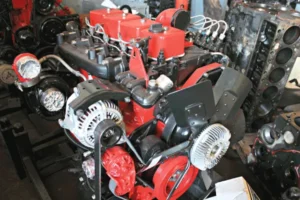
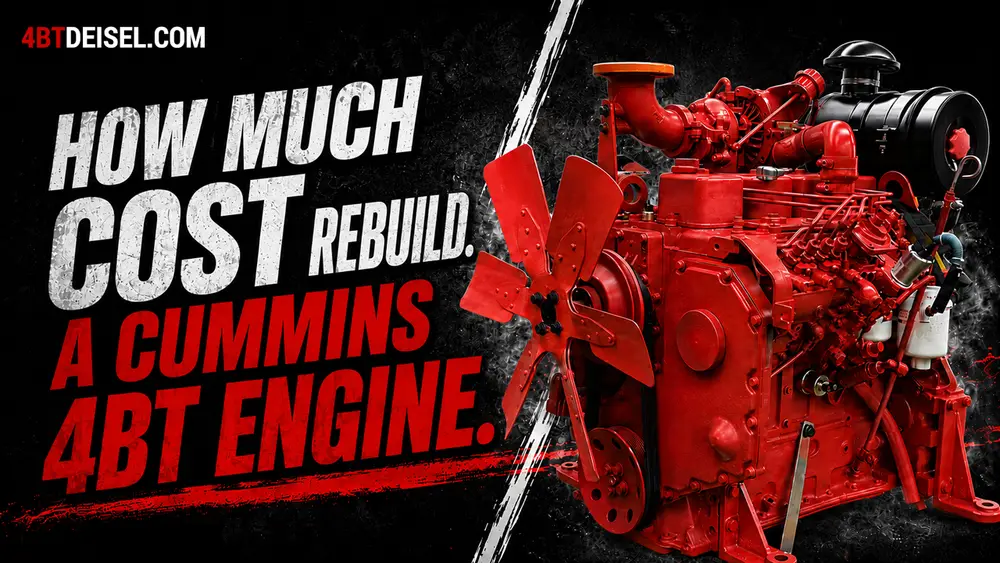
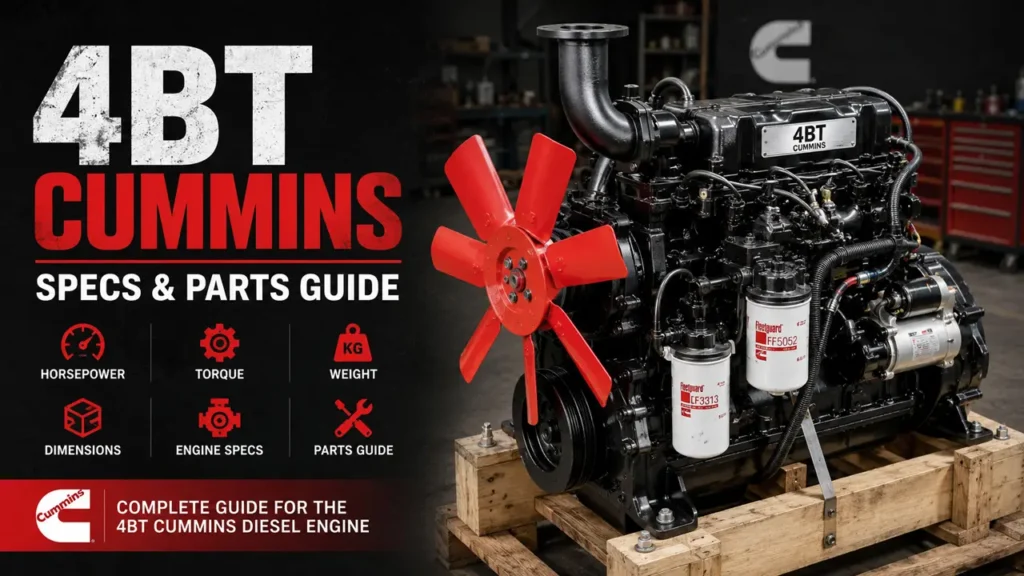
The Cummins 4BT is a 3.9L inline-four diesel engine from the Cummins B-series engine family. It was commonly used in industrial equipment, step vans, generators, small commercial vehicles, and other work applications.
Swap builders like the 4BT because it is mechanically simple, compact compared with the 6BT, and capable of strong low-end torque. It is especially popular in Jeep, Bronco, Ranger, Toyota truck, and compact off-road diesel swap projects where engine bay space is limited.
A 4BT Cummins swap is often considered by builders who want diesel torque without the size and weight of a 5.9L inline-six. The downside is that the 4BT can vibrate more than the 6BT because of its inline-four design. Clean used 4BT Cummins engine options can also be harder to find than many people expect, so buyers often compare used take-out engines with rebuilt or complete replacement options such as a Cummins 4BT3.9-C105 diesel engine.
What Is a Cummins 6BT?
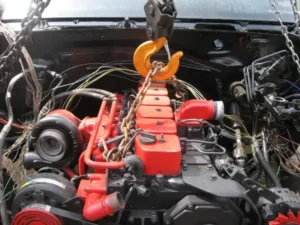
The Cummins 6BT is a 5.9L inline-six diesel engine best known for its use in Dodge Ram 2500 and 3500 trucks. It is one of the most popular diesel swap engines because of its strength, parts availability, and power potential.
A 6BT Cummins swap is usually the stronger choice for towing, full-size truck builds, high-torque off-road vehicles, and horsepower-focused projects. The 6BT is smoother than the 4BT, makes more torque, and has a much higher ceiling for performance upgrades.
The tradeoff is size. A used 6BT Cummins engine may be easier to find than a clean 4BT, but the 6BT is longer and much heavier. It often requires more fabrication, stronger suspension, better cooling, heavier-duty axles, and a transmission that can handle diesel torque. For projects where downtime matters, some builders prefer to start with a complete replacement engine, such as a Cummins 6BT5.9-C130 diesel engine or a Cummins 6BT5.9-C145 diesel engine, instead of taking a chance on an unknown core.
4BT vs 6BT Cummins Specification Comparison
| Specification | Cummins 4BT | Cummins 6BT |
|---|---|---|
| Configuration | Inline 4-cylinder | Inline 6-cylinder |
| Displacement | 3.9L | 5.9L |
| Approx. length | Around 30.6 in | Around 35 in |
| Approx. height | Around 37.7 in | Around 37.7 in |
| Approx. weight | 745-782 lbs | Around 1,100 lbs |
| Common fuel systems | VE or P7100 depending version | VE or P7100 depending version |
| Best for | Compact swaps, fuel economy, trail rigs | Towing, torque, high horsepower builds |
| Main drawback | Vibration and lower power ceiling | Size, weight, and drivetrain demand |
Published engine dimensions and ratings can vary by application, accessory layout, and market version. For factory-level reference material, Cummins maintains official engine documentation through its brochure library and B-series product resources.
Size and Weight Comparison
The specification table above gives the basic size and weight numbers, but the real swap decision comes down to how those numbers affect the vehicle. A few inches of engine length can decide whether you keep the stock radiator location, move to an electric fan, trim the firewall, or redesign the intercooler and cooling package.
This is where the 4BT has its clearest packaging advantage. Its shorter block gives builders more room to work with in compact engine bays, especially in Jeep CJ, YJ, TJ, Wrangler, Ford Ranger, early Bronco, Toyota pickup, and Dodge Dakota projects. That extra space can make the difference between a clean installation and a swap that requires major firewall, core support, or front accessory changes.
The 6BT creates a different kind of challenge. Its extra length and weight are not just engine-bay concerns; they also affect front suspension load, steering feel, braking demand, axle choice, and frame stress. In a full-size truck or 3/4-ton platform, those demands may be reasonable. In a compact 4×4, they can quickly turn the swap into a much larger chassis project.
Weight also changes how the vehicle behaves after the swap. A heavier 6BT can make the front end sit lower, increase spring-rate requirements, and put more load on the front axle and brakes. The 4BT is still heavy compared with many gasoline engines, but it is generally easier to manage in smaller builds.
The practical rule is simple: use the 4BT when packaging room, front-end weight, and compact drivability matter most. Use the 6BT when the vehicle has enough chassis, cooling, suspension, and drivetrain capacity to support the larger engine. Before buying parts or cutting metal, measure the actual engine with its accessories, fan setup, transmission adapter, oil pan, and intended cooling package installed.
Power and Torque Potential
The 6BT has the clear advantage for power.
A 4BT can make useful low-end torque and is excellent for slow-speed off-road driving, utility builds, and fuel-conscious swaps. However, it has a lower practical horsepower ceiling and can become less refined as power increases.
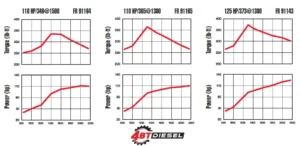
4bt cummins 3.9b horsepower torque curve
The 6BT is the better platform for serious horsepower and towing. Its larger displacement, inline-six balance, and strong aftermarket support make it easier to build for 300 hp, 500 hp, or more depending on the setup.
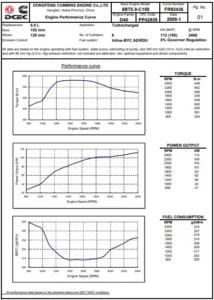
6bt cummins 5.9b horsepower torque curve
If your goal is reliable moderate torque in a compact package, the 4BT makes sense. If your goal is big torque, heavy towing, or high-power diesel performance, the 6BT is the stronger choice.
Fuel Economy: Is the 4BT Always Better?
The 4BT is usually more fuel efficient than the 6BT, but vehicle weight matters.
In a lightweight Jeep or compact truck, the 4BT can deliver good fuel economy because it has less displacement and less rotating mass. This is why many builders compare 4BT vs 6BT fuel economy before starting a compact swap.
But in a heavy full-size truck, the 4BT may need to work harder, which can reduce the fuel economy advantage. The 6BT uses more fuel, but it may be more efficient under heavy load because it does not have to work as hard to move a large vehicle or tow a trailer.
For compact builds, choose the 4BT. For heavy vehicles or towing, the 6BT may be the more practical engine.
Swap Difficulty and Fabrication Work
Neither swap should be judged by engine price alone. The real cost often comes from everything around the engine.
Common swap requirements include:
- Custom engine mounts
- Transmission adapter or transmission swap
- Transfer case compatibility
- Driveshaft modifications
- Radiator and intercooler upgrades
- Exhaust routing
- Oil pan and axle clearance
- Firewall or core support modification
- Fuel system updates
- Gauges and wiring
- Suspension spring-rate changes
- Brake upgrades
- Stronger axles for high-torque builds
A 4BT swap is usually easier in smaller vehicles because of its shorter length and lower weight. A 6BT swap often requires more planning because the engine can overwhelm light-duty frames, axles, transmissions, and suspension systems.
For many builders, the question is not simply “4BT or 6BT for swap?” The better question is: can the vehicle safely support the engine, torque, cooling demand, and drivetrain upgrades?
Best Vehicles for a 4BT Swap
The 4BT is usually the better Cummins swap candidate when the vehicle is compact, the engine bay is short, or front-end weight needs to stay under control. It is still a heavy diesel, but it is easier to package than a 6BT in many smaller builds.
Good 4BT swap candidates often include Jeep CJ, YJ, TJ, and Wrangler projects, Ford Ranger builds, early Bronco swaps, Toyota pickups, Dodge Dakota projects, and compact off-road vehicles where low-speed torque matters more than maximum horsepower.
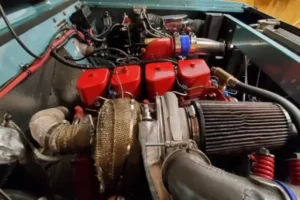
For a Jeep CJ, YJ, TJ, or Wrangler swap, the 4BT Cummins is often easier to package than a 6BT. A 4BT Jeep swap or 4BT Jeep Wrangler swap is popular because the engine provides diesel torque without adding as much length and weight as the 6BT.
The 4BT can also work well in a Cummins Ranger swap, Cummins Bronco swap, Toyota pickup diesel swap, or compact trail build. In full-size trucks, however, the 4BT may feel underpowered if the vehicle is heavy, frequently loaded, or used for towing.
Best Vehicles for a 6BT Swap
The 6BT is a better fit when the vehicle has enough chassis, suspension, cooling, and drivetrain strength to support a larger inline-six diesel. It is usually more at home in full-size trucks, 3/4-ton pickups, Dodge donor builds, towing vehicles, and heavy off-road projects where torque and power potential are more important than compact packaging.
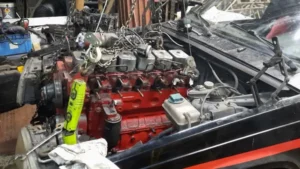
A 6BT Jeep swap or 6BT Jeep Wrangler swap can be done, but it usually requires major planning around the frame, suspension, cooling system, transmission, transfer case, axles, and brakes. In smaller platforms, the 6BT often turns a simple engine swap into a complete drivetrain and chassis build.
The 6BT makes the most sense when the rest of the vehicle is already built for diesel torque. For full-size trucks and towing vehicles, it is often the best Cummins engine for swap projects because the chassis can better handle the engine’s size, weight, and torque output.
Cost and Availability
A common mistake is assuming the smaller 4BT is always cheaper. In many markets, clean used 4BT Cummins engine options can be harder to find and more expensive than expected because the 4BT was not installed in pickup trucks in the same volume as the 6BT.
The 6BT may be easier to source because of its popularity in Dodge Ram trucks. A complete donor truck can provide the engine, transmission, wiring, accessories, intercooler, radiator parts, and sometimes useful drivetrain components.
However, the 6BT can still become the more expensive swap once you account for:
- Stronger transmission
- Heavier axles
- Suspension upgrades
- Cooling system changes
- Intercooler packaging
- Frame and mount fabrication
- Brake upgrades
- Labor cost
Whether you are shopping for a used 4BT Cummins engine, a used 6BT Cummins engine, a Cummins 4BT engine for sale, or a Cummins 6BT engine for sale, always look beyond the engine price. The engine purchase is only one part of the total swap cost. If you are comparing engine versions or trying to match parts before buying, it is worth sending the engine serial number, photos, and application details through the 4BTDiesel contact page before ordering.
Rebuilt, Long Block, or Junkyard Engine?
A junkyard engine can look attractive because of the lower upfront price, but it can become expensive quickly if it needs fuel system work, sealing, turbocharger replacement, or internal repairs.
Many builders compare three options:
- Used 4BT or 6BT engine
- Rebuilt Cummins engine
- Cummins long block engine or remanufactured engine
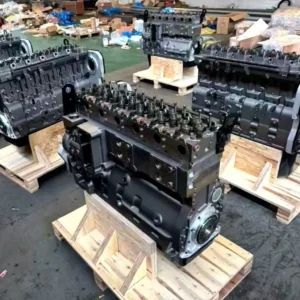
A Cummins remanufactured engine or long block may cost more upfront, but it can reduce risk if you want a cleaner starting point. This is especially important for work trucks, customer builds, towing vehicles, or projects where downtime is expensive.
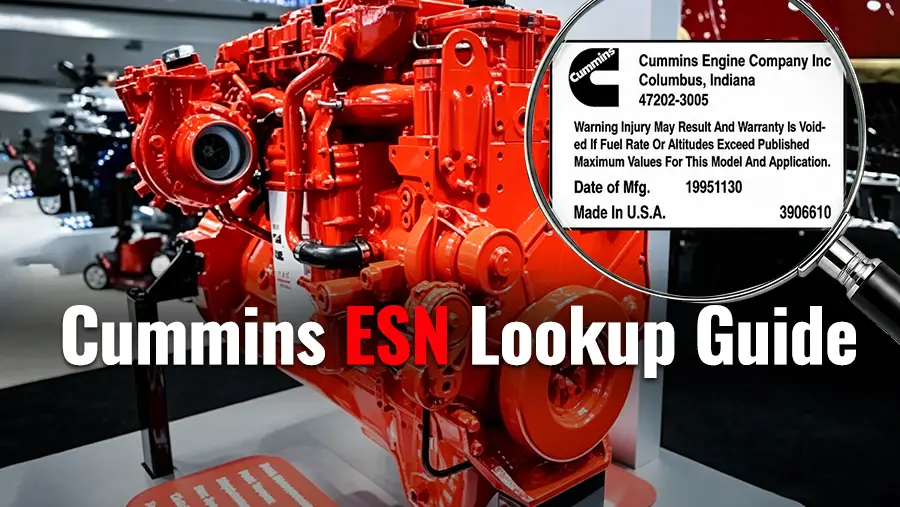
Before buying any used or rebuilt engine, confirm the engine serial number, fuel system type, accessory layout, and application history. The same rule applies when buying replacement parts: start with the exact engine information, then match the component. For broader sourcing, the Cummins diesel engines and diesel engine parts categories are better starting points than guessing from appearance alone.
Parts Availability and Maintenance
The 6BT has an advantage in replacement parts and aftermarket support. Because it was widely used in Dodge Ram trucks and industrial applications, 6BT replacement parts are generally easier to find.
The 4BT also has good support, but some industrial versions may require extra attention when sourcing brackets, accessories, fuel system components, or conversion parts.
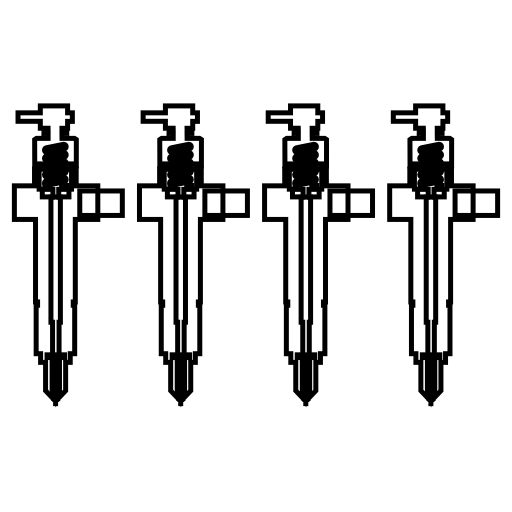
Common 4BT replacement parts and 6BT replacement parts include:
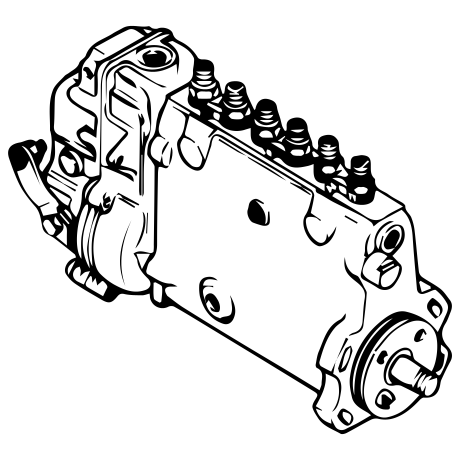
- Injection pumps
- Bosch P7100 injection pump components
- Injectors and nozzles
- Turbochargers
- Gasket kits
- Water pumps
- Fuel lift pumps
- Oil seals
- Cooling system parts
- Engine rebuild components
- Cummins B-series engine parts
When ordering Cummins B-series engine parts, always confirm compatibility by engine model, serial number, fuel system, and application. A 4BT and 6BT may share some design similarities, but many parts are not directly interchangeable.
Turbocharger selection is a good example. A turbo may physically look close, but the part number, flange, compressor size, and application still matter. For reference, this H1E turbocharger for Cummins 4BT, 6BT, 4BTA, and 6BTA engines shows how one component can cover several related B-series applications only when the part number and fitment match.
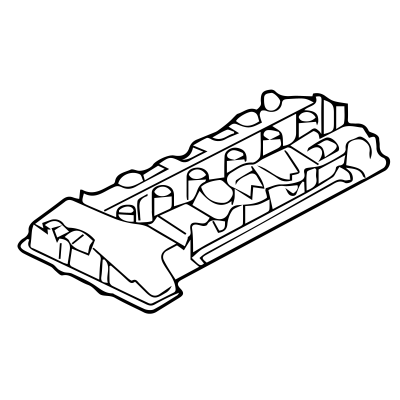
If you are also inspecting the top end during a rebuild, this related guide on cylinder head function and maintenance gives useful background before replacing gaskets, valves, or head-related components.
Junkyard Engine Risks
A used 4BT or 6BT can be a good starting point, but a junkyard engine should never be trusted blindly.
Before installing a used engine, inspect or test:
- Compression
- Blow-by
- Oil leaks
- Coolant contamination
- Fuel system condition
- Turbo shaft play
- Injection pump condition
- Crankcase pressure
- Cooling system corrosion
- Front and rear main seals
- Overall service history
Even if the engine runs, you should budget for resealing, basic maintenance, and possible fuel system repairs. A cheap used engine can become expensive if it needs major work after installation.
4BT vs 6BT Pros and Cons
Both engines are durable and swap-friendly, but their advantages and drawbacks point to different projects. The 4BT is usually better for compact packaging, while the 6BT is stronger for towing, power, and heavy-duty builds.
| Engine | Pros | Cons |
|---|---|---|
| Cummins 4BT | Compact, lighter than the 6BT, fuel-efficient, mechanically simple, strong at low rpm, and easier to fit in compact swap projects. | More vibration, lower horsepower ceiling, harder to find clean used units, may need conversion parts, and not ideal for heavy towing. |
| Cummins 6BT | Stronger torque and horsepower potential, smoother operation, better parts support, good donor-truck compatibility, and better for towing. | Heavy, long, needs more engine bay space, requires stronger drivetrain and cooling upgrades, and may be overkill for small vehicles. |
Final Verdict: Should You Choose a 4BT or 6BT?
Choose the Cummins 4BT if you are building a compact vehicle, off-road project, trail rig, or fuel-economy-focused swap where space and weight matter. It is the better choice for many Jeep, Ranger, Bronco, Toyota, and compact truck projects.
Choose the Cummins 6BT if you need towing power, higher horsepower potential, smoother operation, and stronger parts availability. It is the better match for full-size trucks, 3/4-ton pickups, heavy-duty builds, and projects based around a complete Dodge donor truck.
The best engine is not the one with the biggest power number. It is the one your chassis, drivetrain, budget, and intended use can realistically support. Before you buy, confirm the engine model and parts list carefully. If you are unsure which Cummins engine or replacement parts fit your project, 4BTDiesel can help review your application details.