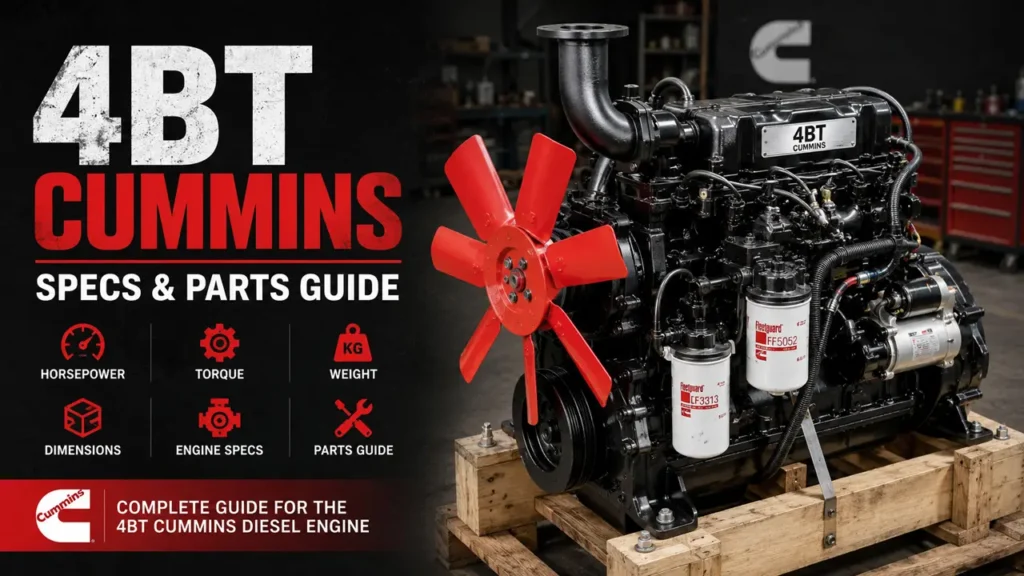


The 4BT Cummins is a compact 3.9L diesel engine with a strong industrial record. Buyers search for 4BT Cummins specs because one engine name can cover many builds, ratings, pumps, oil pans, and applications.
This guide gives you the core numbers first. Then it explains horsepower, torque, weight, dimensions, turbo setup, oil capacity, and the best way to match replacement parts.
The 4BT belongs to the same service world as many Cummins diesel engines used in industrial machines, marine packages, and generators. If you need Diesel engine parts, confirm the engine serial number, CPL, and part number before ordering.
A small difference in build code can change the correct gasket, pump, injector, turbo, or rebuild kit. Use this guide for planning, then verify the exact part match before you buy.
Quick 4BT Cummins Specs
Use this table as a fast reference. Treat these specs as common ranges, not a promise for every engine. Always verify your data plate or engine serial number before buying parts.
| Spec Item | Common 4BT Cummins Specs |
|---|---|
| Engine family | Cummins B Series |
| Common names | 4B, 4BT, 4BTA, 4BTAA, 3.9 Cummins |
| Configuration | Inline 4-cylinder, 4-stroke diesel |
| Displacement | 3.9L, about 239 cubic inches |
| Bore x stroke | About 4.02 in x 4.72 in |
| Aspiration | 4B is naturally aspirated; 4BT is turbocharged; 4BTA/4BTAA add aftercooling or intercooling, depending on version |
| Fuel system | Direct injection; mechanical fuel system on many older engines |
| Common horsepower range | About 64 to 130 hp for many 4BT industrial ratings; some aftercooled builds rate higher |
| Common torque range | About 267 to 385 lb-ft, depending on CPL and application |
| Approximate weight | About 745 to 800 lb, depending on accessories and flywheel setup |
| Common dimensions | About 30.6 in long, 24.6 in wide, and 37.7 in high |
| Firing order | 1-3-4-2 |
| Oil capacity | Often about 10 to 15 quarts with filter, depending on oil pan |
| Block and head | Cast iron block and cast iron cylinder head |
| Best use cases | Industrial equipment, generators, pumps, skid steers, farm equipment, marine use, and swaps |
What Is a 4BT Cummins?
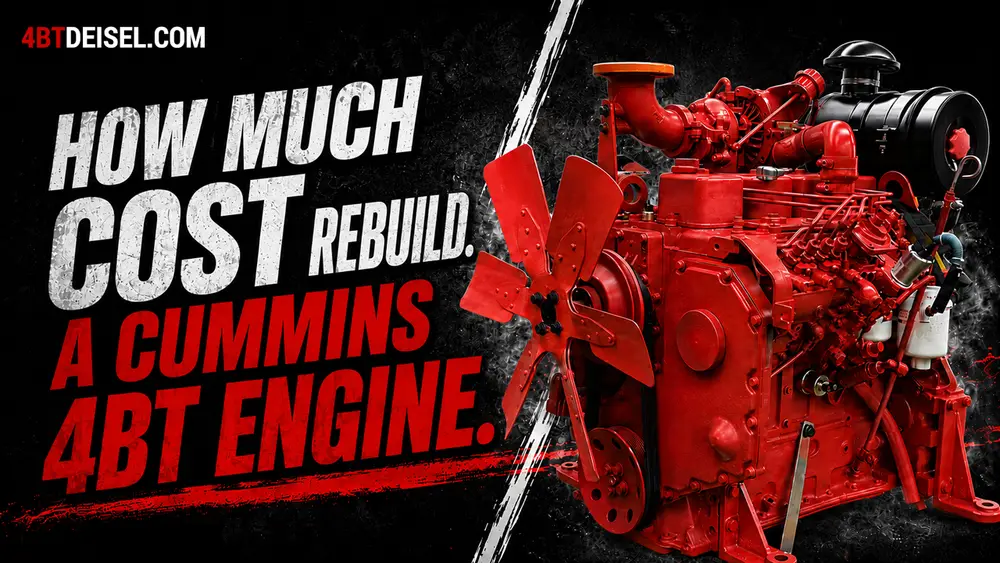
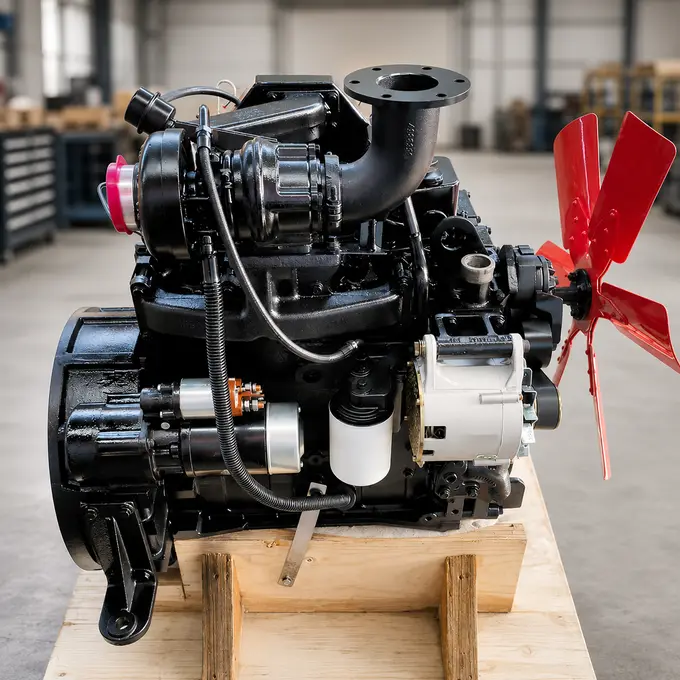
The 4BT is a 4 cylinder Cummins diesel engine from the B Series family. The name breaks down in a simple way: 4 means four cylinders, B means B Series, and T means turbocharged.
The Cummins 4BT diesel engine shares basic design ideas with the larger 5.9L 6BT. It uses an inline layout, strong iron castings, and simple mechanical systems on many older versions. That makes it easier to service than many newer electronic diesel engines.
The 4BT became common in delivery trucks, construction equipment, farm machines, pumps, wood chippers, generators, and marine packages. It also became popular for swaps because it is shorter than a 6BT and still makes strong low-rpm torque.
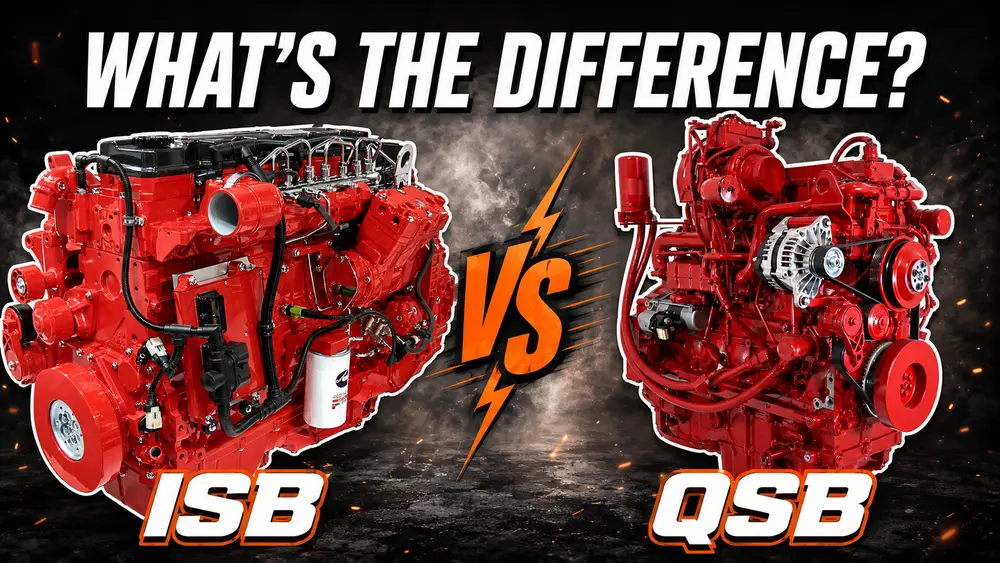
4B vs 4BT vs 4BTA: What Is the Difference?
Many buyers use these names as if they mean the same engine. They do not.
| Name | Basic Meaning | What To Know |
|---|---|---|
| 4B | Naturally aspirated 3.9L B Series | Simpler, lower power, no turbo |
| 4BT | Turbocharged 3.9L B Series | Most common name in swaps and industrial use |
| 4BTA | Turbocharged and aftercooled 3.9L B Series | Often supports higher power ratings |
| 4BTAA | Turbocharged and air-to-air aftercooled | Less common, application-specific |
Do not order parts from the name alone. A 4BT water pump, injector, turbo, gasket set, or overhaul kit can vary by CPL and engine serial number.
4BT Cummins Horsepower
Most people ask about 4BT Cummins horsepower because they want to know if the engine has enough power for a swap or machine repair. The honest answer is: it depends on the build.
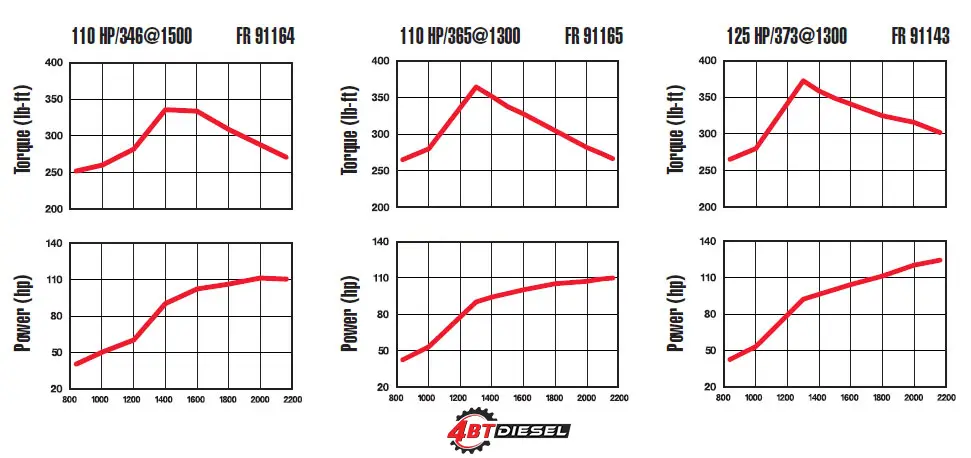
Many common industrial 4BT engines sit around 105 to 130 horsepower. Lower-output versions exist, and some aftercooled versions can rate higher. The engine data plate gives the best answer for your exact engine.
Horsepower also depends on the fuel system, turbo, aftercooler, governor setting, and duty cycle. A generator engine, skid steer engine, marine engine, and vehicle-swap engine may not use the same rating.
4BT HP and Torque
The 4BT does not win because of peak horsepower. It wins because it makes useful torque at low rpm.
Common 4BT torque ratings fall around 267 to 385 lb-ft. Some versions make less, and some aftercooled packages make more. This low-speed torque helps the engine move loaders, pumps, compact equipment, and heavy vehicles at low rpm.
| Use Case | What Matters Most |
|---|---|
| Skid steer or loader | Low-rpm torque and cooling capacity |
| Generator | Steady rpm and correct governor setting |
| Marine use | Cooling system, duty rating, and corrosion control |
| Vehicle swap | Weight, vibration, gearing, and packaging |
| Pump or compressor | Continuous duty rating and fuel system condition |
How Much Does a 4BT Cummins Weigh?
A common 4BT Cummins weighs about 745 to 800 lb. The final number changes with the flywheel housing, turbo, alternator, starter, brackets, fan, oil pan, and other accessories.
That weight matters. A 4BT diesel motor can weigh much more than many gas four-cylinder engines. If you plan a swap, check front axle capacity, spring rate, steering clearance, and frame strength before you buy.
For industrial equipment, weight matters in a different way. You need to match the mounting points, flywheel housing, cooling package, and pump drive before you approve a replacement engine.
4BT Cummins Dimensions
Common 4BT Cummins dimensions are about 30.6 inches long, 24.6 inches wide, and 37.7 inches high. These numbers work as a planning guide, not a final install drawing.
Accessories can change the space you need. Turbo placement, exhaust routing, fan setup, alternator brackets, motor mounts, oil pan depth, and transmission adapter can all affect fit.
| Dimension | Common Planning Number |
|---|---|
| Length | About 30.6 in |
| Width | About 24.6 in |
| Height | About 37.7 in |
| Weight | About 745 to 800 lb |
Measure the engine with the parts you plan to use. A bare engine measurement will not tell you if the turbo outlet, fan, starter, or oil pan will clear your machine.
Cummins 4BT Turbo Setup
The 4BT is the turbocharged version of the 3.9L B Series. Turbo size and layout can vary by application, so the correct replacement depends on the engine serial number, turbo tag, and part number.
A healthy turbo should build boost smoothly, move clean oil, and show no contact between the compressor wheel and housing. A failed turbo can cause low power, oil smoke, noise, high exhaust temperature, or oil in the intake piping.
If you replace a Cummins 4BT turbo, inspect the oil feed line, oil drain line, air filter, exhaust restrictions, and crankcase pressure. A new turbo can fail early if the root problem stays in the system.
4BT Cummins Engine Oil Capacity and Maintenance Notes
4BT oil capacity often falls between 10 and 15 quarts with the filter. The exact number depends on the oil pan and application.
Do not guess oil capacity from the engine name. Check the dipstick, oil pan style, service manual, and engine serial number. Add oil slowly after service, then recheck the level after the engine runs and the filter fills.
| Maintenance Item | Practical Note |
|---|---|
| Engine oil | Match oil type to climate, load, and service manual |
| Oil filter | Confirm thread, seal diameter, bypass spec, and application |
| Fuel filter | Replace early if fuel quality is poor |
| Air filter | Inspect often in dusty equipment |
| Coolant | Keep the radiator, pump, thermostat, and hoses in good condition |
| Valve lash | Use the correct cold lash spec for your engine version |
Why the 4 Cylinder Cummins Became Popular
The 4 cylinder Cummins became popular because it combines compact size with heavy-duty construction. It is smaller than the 6BT, but it still uses a strong iron block, direct injection, and simple serviceable parts.
Many owners also like the mechanical feel. Older 4BT engines do not need complex electronics to run. That helps in field repairs, repowers, and industrial machines that need uptime more than comfort.
The tradeoff is noise and vibration. The 4BT is a large inline 4 diesel, and it can shake more than a six-cylinder engine. Good mounts, correct idle speed, balanced accessories, and proper installation help control it.
Common 4BT Cummins Applications
The Cummins inline 4 works in many applications because it fits where a longer six-cylinder engine may not. It also gives operators strong low-speed pulling power.
| Application | Why the 4BT Fits |
|---|---|
| Skid steers and loaders | Compact size and strong low-rpm torque |
| Backhoes and farm equipment | Simple service and steady pulling power |
| Pumps and generators | Good fuel economy at steady load |
| Marine packages | Compact diesel power in tight engine bays |
| Step vans and delivery trucks | Durable commercial-duty service |
| Swaps and conversions | Mechanical simplicity and parts availability |
Before you use a 4BT in a swap, plan the whole system. Check cooling, gearing, transmission adapter, mounts, exhaust, fuel return, throttle control, and front-end weight.
How To Identify the Right 4BT Parts
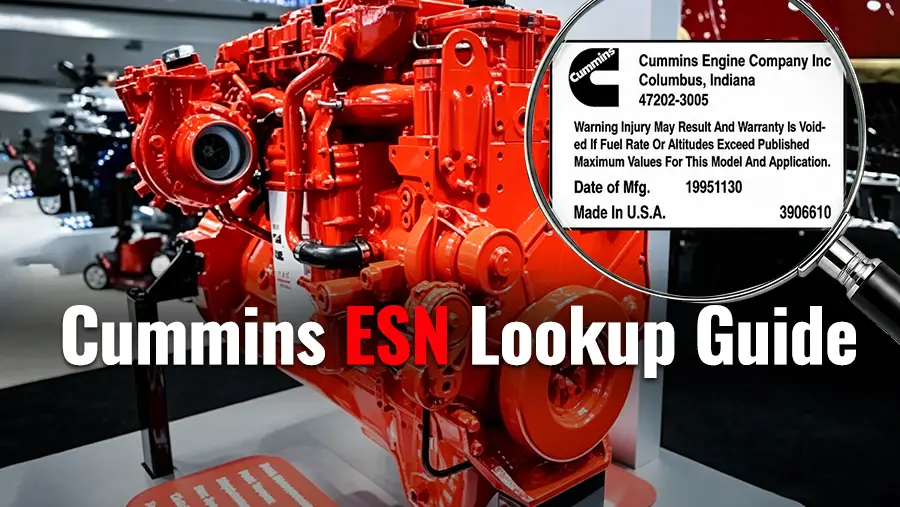
Use the engine data plate before ordering parts. The model name helps, but the engine serial number and CPL tell you much more.
For OEM cross-checking, Cummins provides the official Genuine Cummins Parts catalog and QuickServe Online. These resources help confirm service information, part numbers, and engine-specific details.
Here is a simple part-matching flow:
Find the engine data plate
        |
        v
Record engine serial number, CPL, and model
        |
        v
Check the part number on the old component
        |
        v
Compare fitment by system: fuel, air, cooling, block, head
        |
        v
Confirm before ordering gasket, pump, turbo, injector, or rebuild kit
For help, use the 4BTDiesel Cummins engine serial lookup guide. You can also send the engine serial number, CPL, old part number, and photos through the Parts quote page.
4BT Parts That Often Need Verification
Some parts look similar but do not interchange across all 4BT engines. Spend a few extra minutes on identification before you buy.
If you are replacing a complete engine, long block, short block, or major component group, compare your build with Cummins engine assembly and spare parts options before ordering.
| Part Group | What To Verify |
|---|---|
| Overhaul kit | Bore size, piston type, gasket thickness, CPL, liner style if applicable |
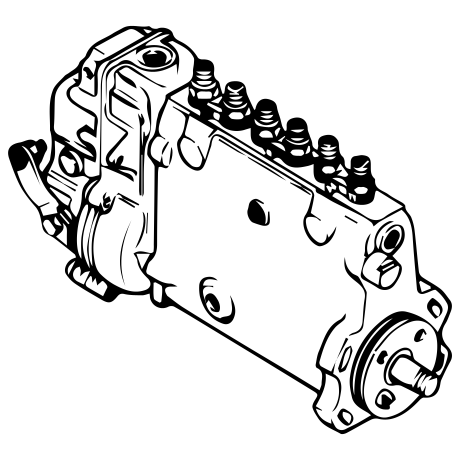
| Fuel injection pump | Pump tag, drive gear, governor setup, fuel lines, application |
| Injectors | Part number, pop pressure, nozzle type, engine rating |
| Turbocharger | Turbo tag, oil line layout, exhaust housing, compressor outlet |
| Water pump | Pulley style, housing, rotation, gasket shape |
| Thermostat | Temperature rating, housing design, seal style |
| Starter | Voltage, tooth count, mounting pattern, rotation |
| Oil cooler | Core style, gasket set, housing match |
| Gasket kit | Upper/lower kit split, head gasket thickness, valve cover design |
Case Example: Replacing Parts on a 4BT Skid Steer
A shop may search for 4BT Cummins specs after a skid steer loses power and starts smoking. The engine tag says 4BT3.9, but that does not identify every part.
The mechanic should record the engine serial number and CPL first. Then they should inspect the turbo tag, fuel pump tag, injector numbers, and air filter condition. This prevents a common mistake: ordering a part for a different 4BT rating.
In this case, the specs guide helps the shop understand the engine. The serial number and part numbers still make the final decision.
Pros and Limits of the 4BT Diesel Motor
The 4BT has real strengths. It is compact for a heavy-duty diesel, makes strong low-end torque, and uses a simple mechanical layout in many builds. It also has broad aftermarket support.
It also has limits. It is heavy for a four-cylinder engine. It can vibrate more than a six-cylinder diesel. It may need careful gearing and mounts in a vehicle swap.
For equipment repair, the 4BT remains a practical choice when the engine matches the machine. For swaps, it works best when the vehicle can handle the weight, vibration, and cooling needs.
Best Next Step Before Buying 4BT Parts
Do not buy parts from the keyword alone. “Cummins 4BT” is too broad.
Before ordering, gather this information:
- Engine serial number
- CPL number
- Engine model from the data plate
- Old part number
- Photos of the failed part
- Machine model or application
- Turbo, pump, or injector tag if relevant
This information helps match the right part the first time.
Conclusion
The 4BT Cummins engine remains a popular choice for many applications because of its compact size, reliable performance, fuel efficiency, and strong low-end torque. From marine vessels and agricultural machinery to construction equipment and off-road conversions, the 4BT offers practical power with simple mechanical design.
If you need quality replacement parts or expert support for your Cummins 4BT engine, 4BTdiesel.com can help. We provide a wide range of Cummins 4BT parts, fast shipping, and reliable service to keep your engine running smoothly.