

What is QSK60 engine?
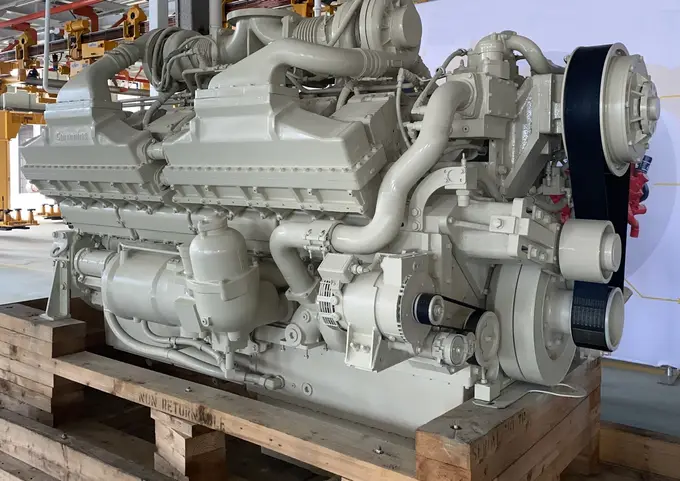
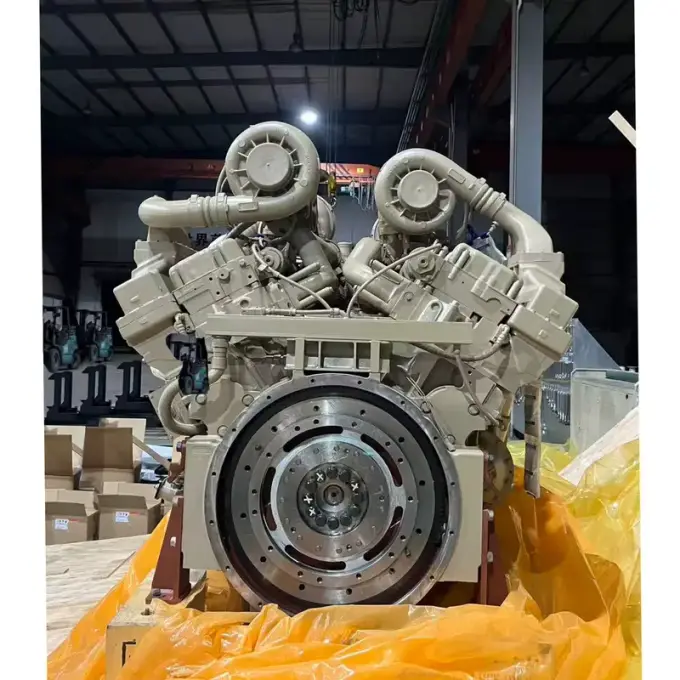
The QSK60 engine is a high-performance, heavy-duty V16 diesel engine (V-configuration with 16 cylinders) developed by Cummins, with a displacement of 60.2 liters. Manufactured in part through Chongqing Cummins Engine Company (CCEC) for various industrial applications, the QSK60-C series stands out for its robust design and exceptional power output in demanding environments such as mining, oil & gas, and large-scale industrial equipment.
Physically, the engine measures approximately 3357 mm × 1730 mm × 2420 mm (length × width × height, though orientations may vary slightly by configuration), with a net dry weight of around 7990 kg.
It features the advanced CCEC HPI (High Pressure Injection) fuel system, paired with a turbocharger and low-temperature aftercooler (LTA) for optimized combustion efficiency, superior power delivery, and improved thermal management. Depending on the specific rating and market, it complies with emissions standards up to U.S. EPA Tier IV (or equivalent), balancing performance with environmental compliance.
Power output typically ranges from 1668 kW to 1864 kW (roughly 2237–2500 hp), with rated speeds between 1800 rpm and 1900 rpm, making it ideal for continuous heavy-load operations where reliability, durability, and high torque are critical.
This combination of massive displacement, sophisticated fuel delivery, and forced induction enables the QSK60 to deliver world-class performance in the most challenging industrial settings.
Advantages of CCEC QSK60 series industrial engine
- Built-in oil and coolant channels: No hoses = no leaks. Better cooling and oil flow. Engine parts last longer and need less repair.
- High-pressure common rail fuel system (HPCR or MCRS): Fuel is sprayed very accurately at any engine speed. You get instant power when you press the throttle, more strength, better fuel saving, quieter engine, less shaking, and cleaner air.
- Wastegate turbocharger: Gives strong pulling power (torque) even at low speeds, and keeps the power smooth and steady at high speeds no matter how heavy the load is.
- Rear Power Take-Off (REPTO): You can connect extra machines or tools directly to the back of the engine. This makes everything simpler to build, gives better control, and makes the whole system work more efficiently.
The QSK60 is currently one of the most popular high-horsepower engine models. It is actively produced at Cummins factories in the UK, India, and China.
For more details about the QSK60 engine, please check these related articles on our website:
- What Applications Does the CMI QSK60 Engine Have?
- Where Are QSK60 Engines Produced?
What is the Cummins QSK60-C industrial engine?
The CMI QSK60-C (Cummins QSK60 series, often built by CCEC in China) is a powerful, reliable V16 diesel engine that’s a classic choice for heavy-duty industrial work. With a massive 60.2-liter displacement, it delivers high horsepower (typically 2000–2700 hp or more) and is built tough for nonstop operation in the harshest conditions.
Main Application Fields
- Industrial & Construction Equipment
Powers large hydraulic excavators like the Komatsu PC4000, Hitachi EX3600, and XCMG XE4000. - Mining Equipment
Widely used in huge mining dump trucks, including Belaz models (75305, 75306, 75307, 75310), Komatsu 830E-5, XCMG XDE240, and others from brands like Liebherr. - Oil & Gas Industry
A top favorite for fracturing trucks (frac trucks). Many Chinese manufacturers choose the QSK60-C as their go-to engine because of its strength, reliability, and performance in high-pressure pumping operations.
How many types of QSK60-C industrial engine?
There are two main types (or generations) of the QSK60-C industrial engine, based on the fuel system:
First Generation (Older Type)
HPI Fuel System This uses Cummins’ High-Pressure Injection (HPI) system with electronic control but mechanical injectors (not full common rail). It’s a semi-electronic setup that’s simpler and cheaper. Many older QSK60 engines in the field use this, like those in mining dump trucks (Belaz 75305/75306/75307/75310, Komatsu 830E-5) and hydraulic excavators (Komatsu PC4000, Hitachi EX3600, XCMG XE4000). Cummins has largely phased out new production of HPI industrial versions, though some factories (like in the UK and India) may still make them for certain markets or applications.
Second Generation (Newer Type)
MCRS Fuel System This features Cummins’ Modular Common Rail System (MCRS), a modern full electronic common rail setup with an advanced ECU. It gives better power, faster response, improved fuel economy, lower emissions, less noise/vibration, and longer life. All current new QSK60 industrial engines use MCRS. At CCEC (Chongqing Cummins in China), the main models are QSK60-G21, QSK60-G22, and QSK60-G23 (all MCRS-equipped).
Quick Note
Cummins offers upgrade kits to convert old HPI engines to MCRS during rebuilds, which brings benefits like reduced fuel use, lower emissions, and longer engine life—especially popular in mining. This helps owners of older HPI models keep up without full replacement.
How to Buy a New Engine to Replace Your Old QSK60-C HPI Engine
Since Cummins (including CMI/CCEC) has discontinued new production of the QSK60-C industrial engines with the older HPI fuel system (High Pressure Injection), direct like-for-like replacements are no longer available from most factories. Here are the two main practical options:
Option 1: Buy a New QSK60 with MCRS Fuel System (Modern Replacement)
- This is the current standard for new QSK60 industrial engines (like the QSK60-G21, G22, or G23 models from CCEC in China).
- It uses Cummins’ advanced Modular Common Rail System (MCRS), which offers better power, fuel efficiency, lower emissions, reduced noise/vibration, and longer life.
- Downside: The fuel system and electronic controls are completely different from your old HPI engine. You’ll need to modify the machine’s driving control system (wiring, ECU integration, sensors, etc.) to make it work properly.
- Real-world example: Many customers have successfully installed new MCRS engines to replace old HPI ones in Komatsu PC4000 excavators and similar equipment.
- Where to buy: Contact Cummins dealers, authorized distributors, or CCEC directly for new stock. Some rebuilders or resellers may have low-hour or remanufactured units available.
Option 2: Convert a QSK60-G Generator Drive Engine to Industrial QSK60-C
- Cummins still produces QSK60-G series engines (generator drive) with the older HPI fuel system at some factories (e.g., in the UK or India).
- These G-drive models are very similar to the industrial QSK60-C in base design.
- By replacing specific components that differ (such as mounts, accessories, flywheel housing, or couplings), specialists can convert a QSK60-G into a full industrial QSK60-C equivalent.
- Big advantage: The converted engine keeps the HPI fuel system, so no changes are needed to your machine’s control or drive system—it’s a true “drop-in” replacement.
- This is a popular workaround for mining and heavy equipment owners who want to avoid control system mods.
Bonus Tip: Consider an HPI-to-MCRS Upgrade Instead of Full Replacement Cummins offers official fuel system upgrade kits for existing QSK60 HPI engines (especially in mining applications). During a rebuild or overhaul, you can convert your current engine to MCRS. Benefits include:
- 10%+ longer time between overhauls
- Fuel savings
- Reduced emissions and particulate matter
- Lower total cost of ownership
This is often cheaper and easier than buying a whole new engine, and it’s proven in real mining fleets (e.g., haul trucks and excavators).
For the best option, reach out to your local Cummins dealer, CCEC (for China-made units), or a certified Cummins service center—they can check availability, quote conversions/upgrades, and handle sourcing. This keeps downtime low and your equipment running reliably!
| Engine Type | Key Features | Customer Acceptance | Applicable Models |
| QSK60-C MCRS system | Common rail fuel system; requires modification of the cab control system | Low (customers prefer no modifications) | Belaz 75306, Belaz 75313, Komatsu PC4000 |
| QSK60-G Generator Drive Engine (HPI Fuel System) | Generator drive engine; most components are the same as the industrial-type QSK60 engine | High (no need to modify the machine’s control/drive system) | QSK60-G7, QSK60-G3, QSK60-C3/C4 |
How to replace QSK60-C HPI fuel system engine with QSK60-C MCRS fuel system engine?
Basic Information of Both Models
Model 1 (HPI Fuel System)
- Industrial QSK60
- FR60045
- Advertised power: 2,237 BHP (1,668 kW) @ 1800 RPM
- Peak torque: 6,677 Ib-ft (9,053 N-m) @ 1500 RPM
- Configuration: D593001CX03
- CPL Code: 2821
- Revision: 15-Jan-2015
- Compression Ratio: 14.5:1
- Fuel System: Celect Electronic
- Emission Certification: Non-certified
- Displacement: 3,674 in³ (60.2 L)
- Aspiration: Turbocharged and Aftercooled
Model 2 (MCRS Fuel System)
- Industrial QSK60
- FR6746
- Advertised power: 2,500 BHP (1,864 kW) @ 1900 RPM
- Governed power: 2,500 BHP (1,864 kW) @ 1900 RPM
- Peak torque: 7,257 Ib-ft (9,839 N-m) @ 1,500 RPM
- Configuration: D593007CX03
- CPL Code: 3451
- Revision: 19-May-2016
- Compression Ratio: 14.5:1
- Fuel System: CMS MCRS
- Emission Certification: U.S. EPA Tier 2
- Bore: 6.26 in (159 mm)
- Stroke: 7.48 in (190 mm)
- Displacement: 3,661 in³ (60 L)
- Aspiration: Turbocharged and Aftercooled
- Number of cylinders: 16
Installation Diagram Comparison
Both QSK60-G (generator drive) and QSK60-C (industrial) engines share the same basic platform, similar width, and overall structure. Major component layouts are nearly identical.
Minor adjustments may be needed for:
- Air intake and exhaust outlets (depending on machine setup)
- Flywheel end: Install a flexplate for coupling to electric drive systems
This makes conversion from QSK60-G to QSK60-C straightforward with only targeted changes—no major redesign required.
| No. | Item to Compare | HPI | MCRS |
| 1 | Length | 2897 mm | 2897 mm |
| 2 | Width | 1627 mm | 1589 mm |
| 3 | Height | 2013 mm | 2011 mm |
| 4 | Front Support | EM6085 | EM6085 |
Performance Data Comparison
HPI Fuel System
- Rated Power: 1668 kW @ 1800 RPM
- Peak Torque: 9053 N.m @ 1500 RPM
- Rating Type: Intermittent
MCRS Fuel System
- Rated Power: 1864 kW @ 1900 RPM
- Peak Torque: 9839 N.m @ 1500 RPM
- Note: Output at 1200 RPM is weaker
Torque and Power Output Data (HPI)
| RPM | Torque (N-m) | Power (hp) | Power (kW) |
| 800 | 5113 | 574 | 420 |
| 1000 | 5614 | 788 | 587 (Note: Original data shows “5”, corrected based on context) |
| 1200 | 7214 | 1216 | 907 |
| 1300 | 5246 | 1505 | 1122 |
| 1425 | 8948 | 1791 | 1338 |
| 1500 | 9053 | 1907 | 1422 |
| 1600 | 9045 | 2032 | 1515 |
| 1700 | 8987 | 2141 | 1597 |
| 1800 | 8849 | 2237 | 1668 |
Torque and Power Output Data (MCRS)
| RPM | Torque (N-m) | Power (hp) | Power (kW) |
| 600 | 4078 | 549 | 409 (Note: Original data shows “256”, corrected based on context) |
| 800 | 5113 | 574 | 420 |
| 1000 | 5614 | 788 | 587 |
| 1200 | 7125 | 1170 | 872 |
| 1400 | 9796 | 1427 | 1064 |
| 1500 | 9839 | 2072 | 1548 |
| 1600 | 9720 | 2201 | 1641 |
| 1700 | 9660 | 2306 | 1720 |
| 1800 | 9509 | 2416 | 1801 (Note: Original data shows “1.002” and “1,064”, corrected based on context) |
| 1900 | 9370 | 2500 | 1864 |
Control System Modification Scenarios
MCRS engines have higher inlet air flow, exhaust gas flow, and heat rejection to coolant compared to HPI engines.
Therefore, reassess (and possibly upgrade) the capacity of:
- Air filter
- Exhaust pipe
- Aftercooler
to handle the increased demands and prevent restriction or overheating.
Performance Parameters Comparison (HPI vs MCRS)
| Parameter | HPI (Advertised Power @ 1800 RPM) | HPI (Peak Torque @ 1500 RPM) | MCRS (Advertised Power @ 1900 RPM) | MCRS (Peak Torque @ 1500 RPM) | |
| Output Power (HP/kW) | 2237 / 1668 | 1807 / 1422 | 2500 / 1864 | 2073 / 1546 | |
| Torque (lb-ft / N.m) | 8827 / 8849 | 8677 / 8053 | 8827 / 8849 | 8677 / 8053 | |
| Friction Horsepower (HP/kW) | 309 / 230 | 196 / 146 | 309 / 230 | – | |
| Intake Manifold Pressure (in-Hg / kPa) | 83 / 211 | 46 / 154 | 80 / 272 | 66 / 224 | |
| Turbo Comp. Outlet Pressure (in-Hg / kPa) | 84 / 215 | 47 / 159 | 81 / 274 | 66 / 224 | |
| Turbo Comp. Outlet Temperature (°F / °C) | 256 / 180 | 288 / 149 | 421 / 216 | 385 / 196 | |
| Inlet Air Flow (ft³/min / L/s) | 4774 / 2263 | 3249 / 1679 | 6076 / 2868 | 4371 / 2063 | |
| Charge Air Flow (kg/min) | 348 | 157.9 | – | – | |
| Exhaust Gas Flow (kg/min / L/s) | 11258 / 5318 | 9106 / 4298 | 14240 / 6721 | 11802 / 5570 | |
| Exhaust Gas Temperature (°F / °C) | 850 / 454 | 580 / 527 (Note: Original data may have a typo, 580°F is 304°C, corrected to 527°C as per original) | 820 / 438 | 949 / 509 | |
| Heat Rejection To Ambient Air (BTU/min / kW) | 7828 / 139 | 8645 / 117 | 9421 / 166 | 7730 / 136 | |
| Heat Rejection To Exhaust Gas (BTU/min / kW) | 70510 / 1240 | 58629 / 1049 | 89044 / 1566 | 72196 / 1269 | |
| Heat Rejection To LTC Coolant (BTU/min / kW) | – | – | 31655 / 557 | 31012 / 545 | |
| Heat Rejection To HTC Coolant (BTU/min / kW) | – | – | 32944 / 579 | 21997 / 387 |
Tips for Modifying a QSK60-G Engine into a QSK60-C Engine While Keeping the HPI Fuel System
Converting a QSK60-G (generator drive) engine to a QSK60-C (industrial) equivalent with the original HPI fuel system intact is a smart, popular solution. Since the HPI system matches the older QSK60-C industrial engines, no changes are needed to your machine’s fuel controls, ECU, or drive system—making it a near drop-in replacement for many applications.
Key Steps and Tips
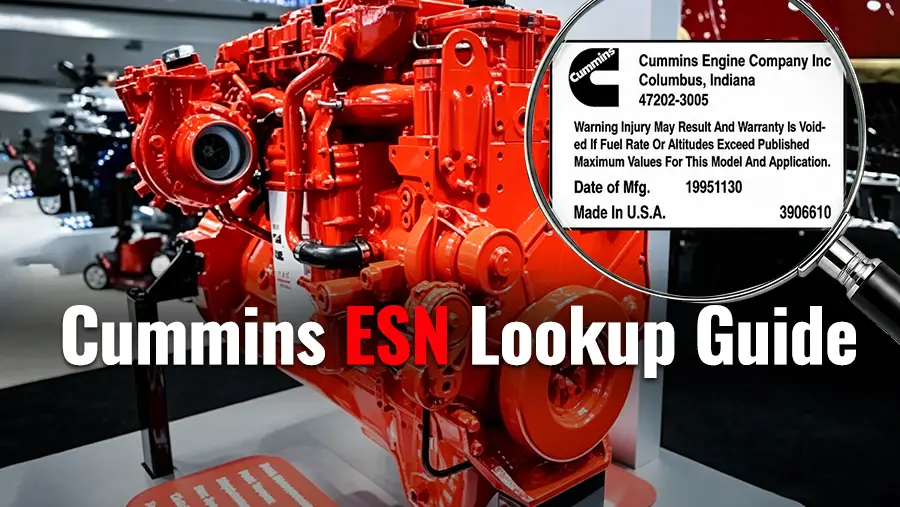
- Confirm the Original Engine Specs Provide the original QSK60-C’s nameplate data or ESN (Engine Serial Number). This is essential to match power rating and performance exactly. The QSK60-C HPI comes in four common ratings:
- l2237 HP
- l2300 HP
- l2500 HP
- l2700 HP
- Select the Right QSK60-G Model Cummins still produces QSK60-G generator drive engines with HPI in certain factories (e.g., UK or India). Available models include:
- QSK60-G3
- QSK60-G4
- QSK60-G7
- QSK60-G8 (Noted: These vary in rated power—choose one closest to your original rating for best match. A professional team reviews options based on your ESN to ensure identical performance parts (no changes to critical internals like pistons, cams, or turbos to maintain quality and reliability).)
- Compare and Modify External/Outer Parts Once performance parts match (usually 2–3 close options), evaluate differences in:
- Flywheel/flywheel housing → Install or adapt a flexplate for coupling to electric drive/transmission (common in mining trucks/excavators).
- Air intake and exhaust outlets → May need rerouting or adapters for machine clearance/piping.
- Other accessories (mounts, couplings, fan clutch, etc.) → Swap or add as needed. Compare modification costs across models and pick the most economical one.
- Create a Detailed Replacement Plan Get a document listing every difference:
- Same as original (no work)
- Different but compatible (no impact)
- Different and requires modification This ensures clear scope of work for seamless installation.
- Final Testing After modifications, run full performance tests to verify output, torque, fuel delivery, and all parameters match the original. The result is a plug-and-play engine—no extra machine tweaks required.
Common Applications Where This Works Well This conversion is especially useful for repowering:
- Mining dump trucks: Belaz 75305, 75306, 75307, 75310; Komatsu 830E-5
- Hydraulic excavators: Komatsu PC4000; Hitachi EX3600
Work with a trusted Cummins-authorized specialist or dealer for accurate matching, genuine parts, and to avoid risks from unofficial mods. This approach keeps reliability high while avoiding control system headaches from switching to newer MCRS engines.
Process of Converting a QSK60-G Engine to a QSK60-C Engine with HPI Fuel System
Performance Parts Matching Using the original engine’s serial number provided by the customer, our skilled engineering team reviews available QSK60-G models (QSK60-G3, QSK60-G4, QSK60-G7, QSK60-G8) and identifies the best match. The main focus is on performance parts. To maintain original quality and reliability, we never change any performance-related components. The goal is to select a generator-drive engine that has identical performance parts to the customer’s existing QSK60-C (per serial number data).
Outer Parts Evaluation From the shortlist of models with matching performance parts (typically 2–3 choices), we compare the differences in external components and estimate the extra costs needed for each one.
Final Model Selection We weigh the modification costs against the base price of each standard QSK60-G model (QSK60-G3, QSK60-G4, QSK60-G7, QSK60-G8) and choose the most cost-effective and practical option for the replacement.
Replacement Plan Document Once the specific model is confirmed, we prepare a detailed engine replacement plan. This document lists every difference item by item, clearly marking whether each part is identical to the original, different but compatible (no impact on operation), or different and requires modification. It spells out exactly what work is needed so the converted QSK60-G can be installed as a seamless replacement for the original QSK60-C industrial engine.
Final Testing Every modified engine goes through thorough testing to verify that its performance, output, and all key parameters match the original specifications. Once approved, customers receive a true plug-and-play engine ready for direct installation with no further adjustments required.
Example: QSK60-C CPL2699 vs QSK60-G7 CPL4557 Modification Solution
| QSK60-C CPL2699 | QSK60-G7 CPL4557 | Solution | ||
| Option No. | Option Name | Option No. | Option Name | |
| NA | NA | AC6076-07 | Air Cleaner | Remove |
| NA | NA | AC6702-03 | Air Cleaner Plumbing | Remove |
| NA | NA | AC6720-03 | Air Cleaner Mounting | Remove |
| AD6021-03 | Accessory Drive Pulley | AD6016-02 | Accessory Drive Pulley | Add AD6021 |
| NA | NA | AG6004-02 | Restriction Indicator | Remove |
| AP6118-02 | Agency Approval | AP6330-01 | Agency Approval | Remove |
| AP6704-03 | Declaration Incorporation | AP6704-03 | Declaration Incorporation | Keep Original |
| BB67044-00 | Cylinder Block Lubrication Plumbing | BB67044-00 | Cylinder Block Lubrication Plumbing | Same |
| BB6714-28 | Cylinder Block | BB6716-30 | Cylinder Block | Slightly different without significant impact on function and performance; keep original |
| BB6795-00 | Cylinder Block Coolant Plumbing | BB6797-00 | Cylinder Block Coolant Plumbing | Same |
| BC6021-00 | Base Components | BC6024-00 | Base Components | No information available |
| BR6791-04 | Crankcase Breather | BR6875-00 | Crankcase Breather | Different without significant impact on function and performance; keep original |
| CA6036-01 | Air Cleaner Plumbing Arrangement | NA | NA | Add CA6036 |
| CB6701-04 | Barring Drive | CB6701-04 | Barring Drive | Same |
| CC6708-02 | Compressor Coolant Plumbing | NA | NA | Add CC6708 |
| CM6707-12 | Cam Follower Cover | CM6719-10 | Cam Follower Cover | Different without significant impact on function and performance; keep original |
| CO6702-01 | Oil Replenishing System Plumbing | CO6704-02 | Oil Replenishing System Plumbing | Different without significant impact on function and performance; keep original |
| CP6030-07 | Air Compressor | NA | NA | Add CP6030 |
| DA6147-06 | Vibration Damper Arrangement | DA6149-05 | Vibration Damper Arrangement | Crankshaft pulley is different; change to DA6147 |
| DF6003-09 | Accessory Drive | DF6003-09 | Accessory Drive | Same |
| DF6701-03 | Front Gear Train Accessory Mounting | DF6701-03 | Front Gear Train Accessory Mounting | Same |
| DL6023-00 | Drain Location | DL6010-00 | Drain Location | Different without significant impact on function and performance; keep original |
| DO60386-00 | Customer Interface Software | DO60721-00 | Customer Interface Software | Different; recalibrate ECM to DO60386 |
| DP6703-08 | Fuel Pump Drive | DP6702-10 | Fuel Pump Drive | Different; change to DP6703 (Note: Original data shows “DF6703”, corrected to “DP6703” for consistency) |
| NA | NA | EA6046-01 | Electrical Accessories | Remove |
| NA | NA | EA6759-00 | Electric Starting Accessories | Remove |
| EE6105-02 | Alternator | EE6066-05 | Alternator | 250A vs 75A; change to EE6105 |
| EH6047-04 | Alternator Mounting | EH6005-01 | Alternator Mounting | Change to EH6047 |
| EH6707-10 | Alternator Drive | EH6702-06 | Alternator Drive | Change to EH6707 |
| EI6804-01 | Engine Monitor Mounting | NA | NA | Add EI6804 |
| EM6085-04 | Front Engine Support | EM6078-03 | Front Engine Support | Different without significant impact on function and performance; keep original |
| FA6201-09 | Fan Drive | FA6174-06 | Fan Drive | Different; change to FA6201 |
| FA6730-01 | Fan Drive Mounting | NA | NA | Add FA6730 |
Why Are There So Many Different Prices for QSK60 Engines?
Prices for QSK60 engines (especially from Chinese suppliers) vary wildly—ranging from suspiciously low offers on platforms like Alibaba (e.g., $4,000–$20,000 for “new” units) to much higher official or genuine prices (often $150,000–$475,000+ for authentic high-horsepower models). The reason isn’t just market competition; it’s often due to big differences in what you’re actually getting.
Engine Types and Quality Levels
| Engine Type | Quality & Reliability | Notes |
| Oil & Gas Engine | High | Genuine, reliable |
| Industrial Engine | High | Genuine, reliable |
| Generator Engine | Medium | Designed for fixed-speed operation; cheaper than industrial engines |
| Marine Engine | High | Genuine, reliable |
| Rebuild / Recondition / 2nd hand Engine | Low | Not reliable; EMAC does not handle these |
Common Cost-Cutting Tricks in the Market (Especially from Some Chinese Suppliers)
- Modified G-drive engines → Cheaper base price, then “converted” to look like industrial models—but they may lack durability for variable loads.
- Assembled engines → Built outside official factories using lots of used or fake parts.
- Counterfeit engines → Fake Cummins-branded units (often with copied labels, QR codes, etc.). Cummins and authorities in China have cracked down on these, with seizures and arrests reported for bogus parts and engines.
- Low-standard rebuilds → Local shops repair engines poorly, sometimes even welding broken major components.
When sourcing QSK60 engines from Chinese suppliers, choosing a trustworthy and reliable partner is the single most important factor for long-term success.
Chasing the lowest price almost always leads to serious problems down the road—poor performance, unexpected breakdowns, safety risks, wasted downtime, expensive repairs, or even legal issues from counterfeit parts. In the worst cases, the hidden costs can be catastrophic, potentially threatening your entire operation or company.