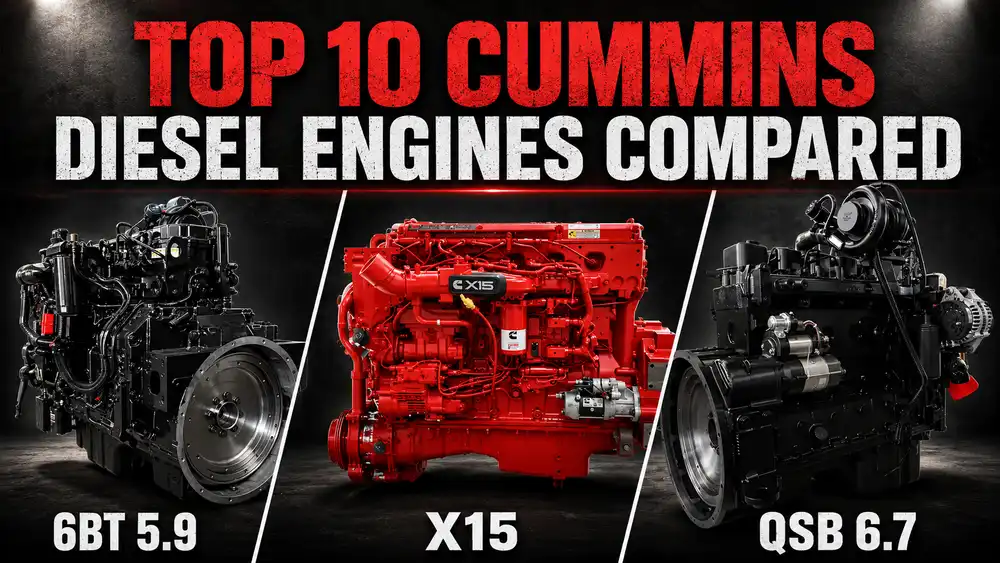


Advancing technology and stringent emissions regulations are the primary drivers of diesel engine innovation worldwide. In the late 1990s, the Cummins ISX15 set out to replace the legendary N14—a tall task for any engine. Over 23 years of production, the ISX15 not only lived up to expectations but also evolved into the Cummins X15, a Class 8 workhorse celebrated for its durability in the modern emissions era. While the X15 is a direct descendant of the ISX15, the two engines feature critical design, performance, and emissions upgrades. Below, we break down their key differences, backed by authoritative data, and compare core specifications side by side.
Cummins ISX15 vs. X15 Technical Comparison
The ISX15 and X15 share foundational architecture, but targeted improvements make the X15 a more refined, efficient successor. The table below highlights core specs, with data sourced from Cummins Official Documentation and industry benchmarks.
| Feature | Early ISX15 (1999-2009) | Late ISX15 (2010-2016) | Cummins X15 (2017-Present) |
|---|---|---|---|
| Configuration | Inline-6 | Inline-6 | Inline-6 |
| Displacement | 14.9 Liters (912 ci) | 14.9 Liters (912 ci) | 14.9 Liters (912 ci) |
| Bore x Stroke | 5.39″ x 6.65″ | 5.39″ x 6.65″ | 5.39″ x 6.65″ |
| Camshafts | Dual Overhead Cam (DOHC) | Single Overhead Cam (SOHC) | Single Overhead Cam (SOHC) |
| Fuel System | Mechanical Unit Injection | Common Rail (XPI) | Common Rail (XPI) |
| Fuel Pump Plungers | N/A | Ceramic (High Failure Risk) | Steel (Standardized) |
| Turbocharger | Fixed or Pneumatic VGT | Holset HE451VE (Electric) | Holset HE400VG (Electric) |
| Engine Brake | Standard Jake Brake | Integrated | Up to 600 Braking HP |
| Peak Horsepower | Up to 600 HP | Up to 600 HP | Up to 605 HP |
| Peak Torque | 2,050 lb-ft | 2,050 lb-ft | 2,050 lb-ft |
Read our full breakdown of Cummins Fault Codes and How to Diagnose Them Here.
Evolution of the ISX15 (1999–2020)
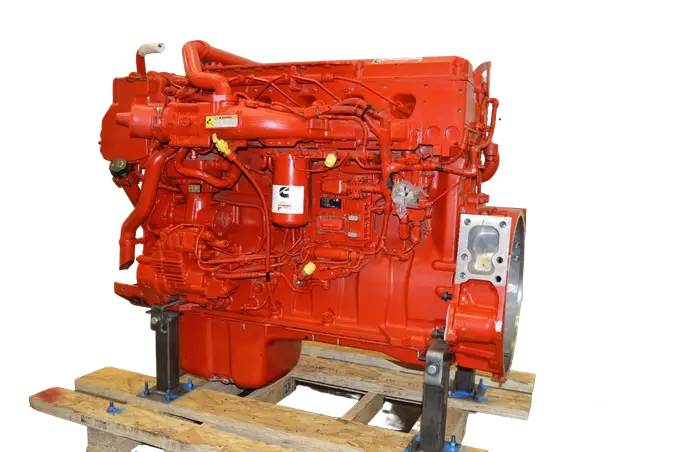
The ISX15 was a product of its time—forged during an era of rapidly tightening emissions rules, forcing constant iteration. Its foundational design featured a robust cast-iron block/head and mid-stop cylinder liners, delivering consistent performance across heavy-duty applications.
Key evolutions of the ISX15 included:
- 1999–2002 (ECM CM570): No emissions control devices; fixed geometry turbochargers; unit fuel injection.
- 2002–2006 (ECM CM870): Introduction of EGR (Exhaust Gas Recirculation) and variable geometry turbochargers (Holset HE551V) to reduce NOx.
- 2007–2009: Addition of DPF (Diesel Particulate Filter) to meet stricter PM (Particulate Matter) standards; HE561VE VGT with faster electric actuation.
- 2010–2020 (ECM 2250): Switch to SOHC and common-rail injection (XPI) for precise fuel delivery (up to 35,000 psi, 5 injection events per cycle); SCR (Selective Catalytic Reduction) added to cut NOx; HE451VE VGT for improved responsiveness.
For deeper insights into early ISX15 emissions compliance, refer to the EPA’s Heavy-Duty Engine Standards.
Cummins X15 Review: Upgrades and Features (2017–Present)
Building on the extensive operational history of the ISX15, Cummins engineered the X15 by retaining the proven short-block architecture while implementing strategic enhancements to address past limitations and maximize efficiency and reliability.
X15 Series Variants
Cummins tailored the X15 to specific applications with three series, as outlined in Cummins’ X15 Product Guide:
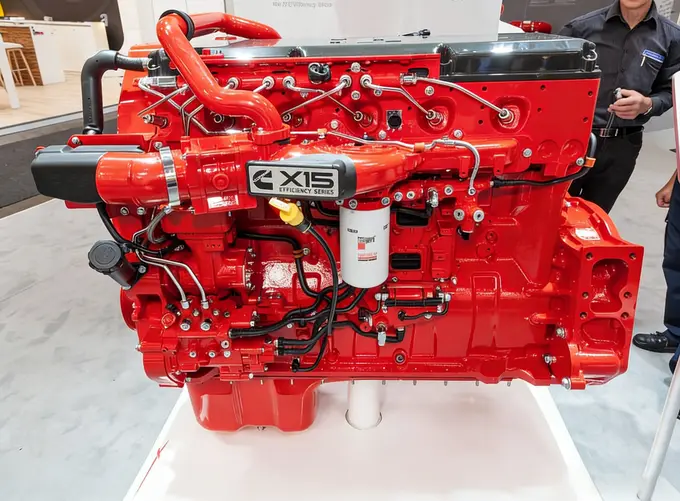
- Efficiency Series: Fuel-economy focused, delivering the 3–10% MPG improvements noted above—ideal for long-haul linehaul.
- Productivity Series: Balanced power and efficiency for regional haul and vocational use.
- Performance Series: Revised piston bowl design, higher compression, upgraded cooling nozzles, and a high-flow EGR system—peaking at 605 hp and 2,050 lb-ft for heavy-duty tasks.
Low-friction components (water pump, geartrain, oil pump, pistons) reduced wear and maintenance costs, while the Holset HE400VG VGT—smaller than the ISX15’s HE451VE but with a 66mm inducer—delivered industry-leading responsiveness. Integrated turbine shaft speed and temperature sensors further enhanced durability.
Emissions Equipment: ISX15 vs. X15
Emissions regulations shaped both engines, but the X15 refined the ISX15’s after-treatment system for better reliability. Here’s how they compare:
- ISX15: Evolved incrementally—from no emissions gear (1999–2002) to EGR, DPF, and SCR by 2010. DPF regeneration cycles and EGR component failures (valves, coolers, sensors) were common pain points. Pre-2017 common-rail models faced ceramic fuel plunger failures, which could cause catastrophic fuel system damage.
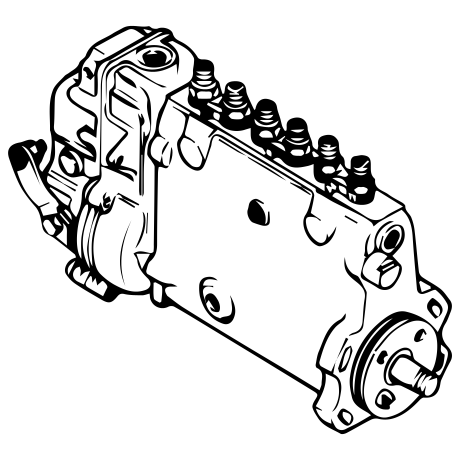
- X15: Retained EGR, DPF, DOC (Diesel Oxidation Catalyst), and SCR but optimized after-treatment. Extended-interval DPF (500,000 miles between ash cleanings for linehaul) reduced downtime. Steel fuel plungers became standard, eliminating pre-2017 ISX15’s plunger issue—though a 2021 recall addressed high-pressure fuel pump failures in some units.
For details on modern diesel emissions compliance, visit the California Air Resources Board (CARB) Heavy-Duty Vehicle Program.
Common Issues: ISX15 vs. X15
ISX15 Problems
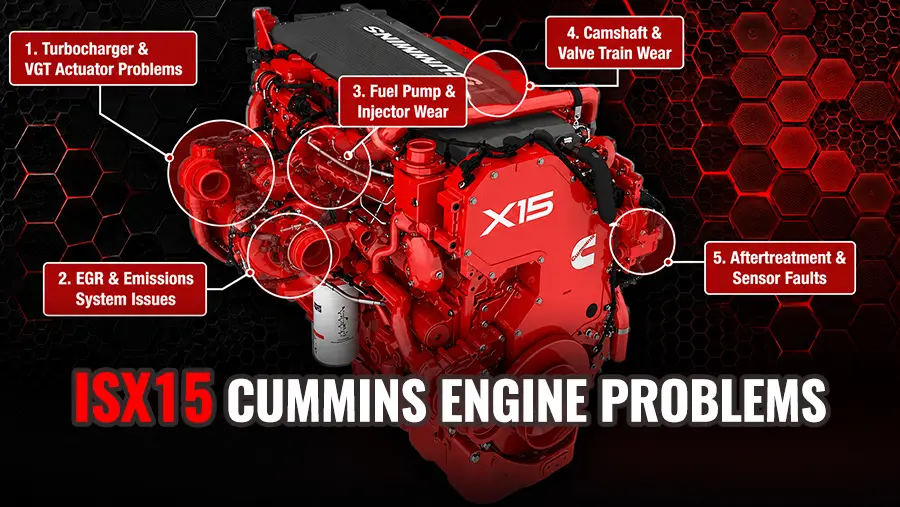
Well-maintained ISX15 engines are reliable, but known failure points include:
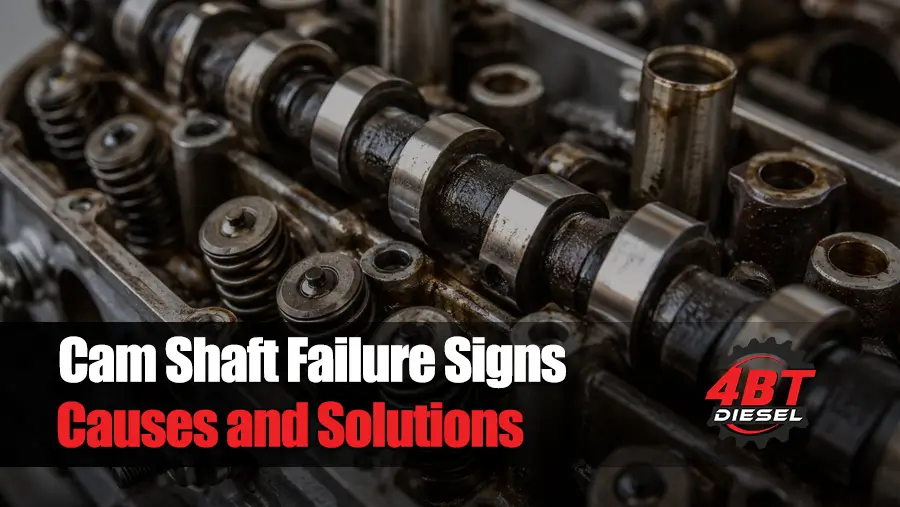
- Valvetrain: Camshaft lobe wear and intake rocker issues (DOHC models, 1999–2009).
- Emissions Components: EGR valve/cooler/sensor failures; DPF clogs (from extended idle/PTO use); occasional DEF doser issues.
- Turbochargers: Soot/carbon buildup on VGT nozzles, leading to actuator failure (cost: $850–$1,000 for actuator replacement; full VGT replacement is costly).
- Fuel System: Pre-2017 ceramic plunger failures (retrofitted to steel plungers in later models).
X15 Problems
The X15 addressed most ISX15 flaws, but modern emissions complexity brings minor issues:
- Sensors: Potential failures of pressure differential, NOx, and EGT sensors (common in all modern diesels).
- EGR Valves: Sticking valves from extended idle time.
- Fuel Pump: 2021 recall for high-pressure fuel pump failures (resolved by Cummins).
Is the X15 Better Than the ISX15?
For modern fleets and owners prioritizing compliance, efficiency, and reliability, the X15’s upgrades (steel plungers, HE400VG VGT, extended-interval DPF) make it the clear choice. The ISX15 remains viable for older vehicles, especially with retrofits, but the X15’s refinements solidify its place as the superior Class 8 engine—upholding Cummins’ legacy and earning comparisons to the iconic N14. In short, the X15 isn’t just an update; it’s the culmination of fixing the ISX15’s gaps to excel in today’s heavy-duty landscape.
The ISX15 was a groundbreaking engine that adapted to an era of strict emissions rules, proving its versatility over 21 years of production. The X15 builds on that legacy—retaining the ISX15’s robust core while fixing weak points, boosting efficiency, and cutting maintenance costs. For fleets and owners prioritizing fuel economy, reliability, and compliance, the X15 is a clear upgrade. The ISX15, meanwhile, remains a viable option for older vehicles—especially with retrofits like steel fuel plungers and fixed geometry turbos (in non-emissions-tested regions).
Both engines uphold Cummins’ reputation for durable Class 8 power, with the X15 earning comparisons to the legendary N14—high praise in the heavy-duty diesel industry.
Which Engine Wins?
As we’ve outlined, the top 5 differences between the Cummins ISX15 and X15—spanning valvetrain evolution, turbocharger technology, fuel system upgrades, emissions after-treatment refinement, and low-friction component integration—define why the X15 is a purpose-built successor. The ISX15, a 21-year workhorse, adapted brilliantly to shifting emissions rules but carried era-specific flaws (ceramic fuel plungers, less refined VGTs, higher maintenance needs). The X15 rectifies these pain points while retaining the ISX15’s robust 14.9L core, delivering better fuel efficiency, lower upkeep costs, and optimized performance across its three series variants.
The Cummins X15 is undoubtedly the superior engine on paper and in practice. It represents the “finished product” that the ISX15 was striving to become.
By moving to a Single Overhead Cam design, standardizing steel fuel pump plungers, and optimizing the aftertreatment system (making it 40% lighter and 60% smaller), Cummins has created a power plant that honors the legacy of the N14.
The Verdict for Buyers:
- If you are buying an older truck: Be very wary of 1999-2009 ISX15s unless you have maintenance records showing camshaft work. For 2010-2016 ISX15s, budget for a fuel pump upgrade if it hasn’t been done.
- If you are buying a newer truck: The X15 (2017+) is the clear winner. It offers the best fuel economy, the lowest maintenance costs, and the most robust braking power in its class.
The ISX15 was a necessary bridge to the future, but the X15 is the destination.
Related Resources